
Timing games are easy to understand and difficult to master. They usually ask for a small action at exactly the right moment, then turn that simple idea into a test of focus, rhythm, prediction, and recovery. That makes them especially well suited to browser play: you can start quickly, try a short challenge, and immediately see whether your timing improves.
This browser timing games comparison looks at four different ways to test those skills: A Dance of Fire and Ice, 3Dash, 67 Kid Game, and 99 Balls 3D. They do not all challenge the same ability. One may appeal more to rhythm-focused players, another to platforming fans, another to arcade players, and another to people who enjoy judging a moving trajectory.
The best choice depends on what you mean by timing. Are you trying to follow a consistent beat? React to a changing course? Make a precise movement under pressure? Or plan the moment to release or direct an action? This guide compares the four games by input style, concentration, replay value, learning curve, and the kind of player most likely to enjoy each one.
Quick answer: which game should you try first?
- Choose A Dance of Fire and Ice if rhythm, repetition, and precise beat-based input are your main interests.
- Choose 3Dash if you want timing combined with movement and platform-style control.
- Choose 67 Kid Game if you prefer a compact arcade-style challenge with a playful presentation.
- Choose 99 Balls 3D if you enjoy judging angles, trajectories, and the right moment to make a shot.
There is no universal winner because each game measures timing in a different way. The most useful comparison is therefore not simply which game is hardest. It is which game creates the kind of pressure you find satisfying.
What makes a good browser timing game?
A strong timing game gives the player a clear objective and a readable relationship between action and result. When a mistake happens, you should be able to understand why it happened. Was the input early? Was it late? Did the route require better anticipation? Did the player need to slow down and observe before acting?
Browser games that test reaction time can feel very different from games that test rhythm. Reaction-focused challenges often reward fast responses to changing situations. Rhythm-focused challenges reward consistency and anticipation. Precision games sit somewhere between the two, asking you to make a controlled decision rather than simply react as quickly as possible.
Replay value matters as well. Timing games are often built around improvement. A first attempt teaches you the pattern, a later attempt helps you control your inputs, and another attempt may reveal a faster or more reliable approach. The best games make that loop feel rewarding instead of repetitive.
With those points in mind, here is how the four games compare.
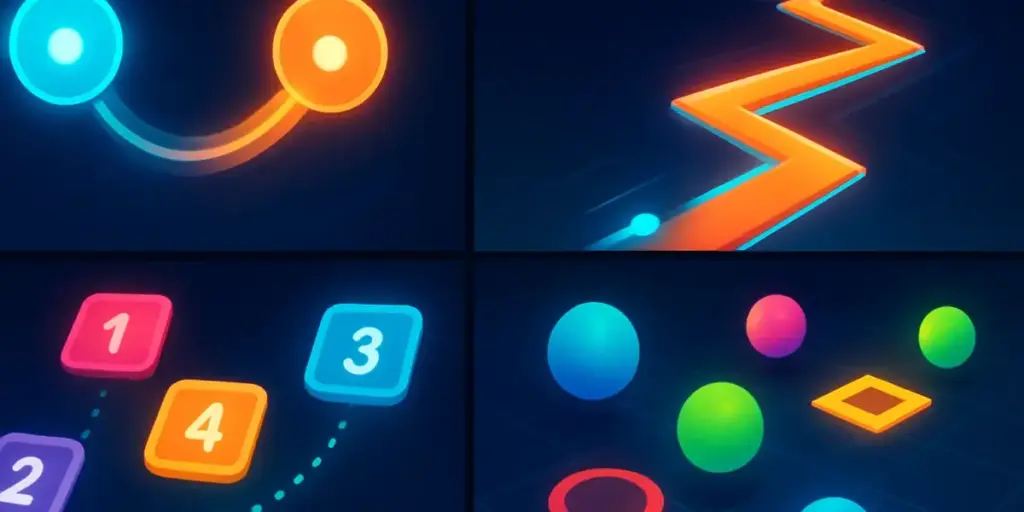
A Dance of Fire and Ice: the clearest choice for rhythm and consistency
A Dance of Fire and Ice is the natural starting point for players who associate timing with rhythm. Its appeal is not just pressing a key or clicking at random intervals. The challenge comes from learning a recurring sense of timing and keeping your inputs aligned with the movement on screen.
That makes consistency more important than frantic speed. A player who normally thinks of reaction time as instant response may need to adjust their approach here. Watching carefully, recognizing the pace, and committing to each input can be more useful than rushing. The game is likely to appeal to players who enjoy turning a sequence of mistakes into a reliable routine.
Its strongest quality in this comparison is focus. Rhythm-based timing asks you to stay mentally connected to what is happening rather than looking away and returning only when an obvious obstacle appears. That concentration can make even a short session feel demanding.
The learning curve may also feel distinctive. Early attempts can be about understanding the timing language of the game. Once that language becomes familiar, improvement depends on maintaining control and avoiding small lapses. If you enjoy repeating a challenge until your hands and attention work together, this is the strongest match of the four.
Best for: rhythm fans, players who enjoy repetition, and anyone who prefers precise consistency over unpredictable reactions.
Potential drawback: players looking for varied movement or a conventional platforming structure may find a rhythm-centered challenge more restrictive than expected.
3Dash: timing with movement and platforming pressure
3Dash brings a platform-game perspective to the comparison. That changes the role of timing. Instead of treating every input as part of a rhythm sequence, you are likely to think about movement, spacing, and the moment at which an action needs to happen in relation to the route ahead.
Platform games can make timing feel more physical. The player is not only waiting for a beat or observing a target. They are also managing position. A successful move may depend on recognizing what is coming, choosing when to act, and keeping enough control to handle the next part of the course.
This makes 3Dash a good choice for players who want browser games that test reaction time without separating reaction from navigation. You may need to respond quickly, but you also need to understand how one movement affects the next. That combination can make the challenge feel more active than a purely rhythm-based test.
The main skill to develop is anticipation. Fast inputs can help when a situation changes suddenly, but preparation is often just as important. Looking ahead, identifying a safe opportunity, and resisting a poorly timed action can make the difference between progress and a restart.
Compared with A Dance of Fire and Ice, 3Dash should feel less like following a musical pulse and more like controlling a route. Compared with a straightforward arcade challenge, it may demand more attention to movement and positioning. Players who enjoy platform games but still want a strong timing element should begin here.
Best for: platforming fans, players who like movement-based challenges, and people who want reaction time and navigation tested together.
Potential drawback: players who prefer a calm, predictable rhythm may find movement-based timing more demanding because several decisions can overlap.
67 Kid Game: an approachable arcade-style timing test
67 Kid Game represents the arcade side of this browser timing games comparison. Arcade games often work best when the goal is immediately understandable and the player can begin learning through direct attempts. That makes this type of game a useful option for a quick session.
Its likely appeal is accessibility. You do not need to approach it as a specialist rhythm player or a dedicated platform expert. Instead, you can focus on the basic relationship between what appears on screen and when you should respond. That makes it suitable for players who want a short skill challenge without committing to a complicated ruleset.
Arcade timing is often about building a clean reaction loop. Observe the situation, decide what matters, act, and learn from the result. With each attempt, the player can become more familiar with the pace and more confident about when to move. The simplicity of that loop is part of the fun.
Among these four games, 67 Kid Game may be the best entry point for someone who is unsure which type of timing challenge they prefer. It can help you decide whether you enjoy quick responses, repeated attempts, or compact arcade sessions before moving to a more specialized game.
It may not be the first pick for players specifically seeking a strong rhythm identity or a complex movement system. However, that is not necessarily a weakness. A focused arcade challenge can be valuable when you want something easy to start and satisfying to revisit.
Best for: casual players, arcade fans, short sessions, and anyone who wants a direct introduction to timing-based play.
Potential drawback: players seeking a highly specialized rhythm or physics challenge may prefer one of the other three games.
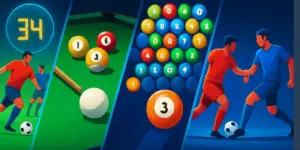
99 Balls 3D: timing through aim, angle, and trajectory
99 Balls 3D approaches timing from a sports and aiming perspective. Here, timing is connected to the moment you choose to act and the direction or trajectory you create. That gives the game a different mental rhythm from a platform or beat-based challenge.
Players who enjoy judging angles may find this format especially appealing. The key question is not only “when should I act?” but also “what will happen after I act?” A carefully chosen moment can be more valuable than a fast response. This encourages observation, planning, and controlled execution.
That makes 99 Balls 3D a useful reminder that reaction time is only one part of timing. Good timing can also mean waiting for a better opportunity, reading the situation, and selecting an action that remains useful beyond the first moment. Players who enjoy sports games, aiming challenges, or visual prediction may prefer this style.
Compared with A Dance of Fire and Ice, the timing feels less tied to a beat. Compared with 3Dash, it may place more emphasis on planning an action than navigating a route. Compared with 67 Kid Game, it can appeal more strongly to players who like to think through the result of each move.
Best for: players who enjoy aiming, prediction, angles, and making deliberate decisions under pressure.
Potential drawback: anyone looking for immediate reflex action may prefer a game where the main demand is faster input rather than trajectory planning.
Which game is best for reaction time?
If your main goal is to improve or test quick responses, 3Dash and 67 Kid Game are the most natural places to begin. Their appeal comes from responding to situations as they develop and making a timely move. The exact experience will depend on your own play style, but both fit the broad idea of a direct arcade or platform reaction challenge.
A Dance of Fire and Ice also tests fast decisions, but its central demand is better described as rhythmic accuracy and consistency. You are not simply reacting to a surprise. You are maintaining a relationship with the pace of play.
99 Balls 3D may be less about raw reaction speed and more about visual timing. It can still test how quickly you recognize an opportunity, but the quality of the decision matters as much as the speed of the response.
Which game is best for rhythm?
A Dance of Fire and Ice is the clear choice for players searching specifically for rhythm. Its identity makes timing feel connected to a repeating pattern, which encourages careful listening or observation and consistent execution.
The other games may involve pacing, but that is not the same as rhythm. 3Dash focuses more on movement, 67 Kid Game on an accessible arcade challenge, and 99 Balls 3D on aim and trajectory. If you want the strongest connection between timing and musical-style repetition, start with A Dance of Fire and Ice.
Which game is best for precision?
Precision can mean several things. For A Dance of Fire and Ice, it means accurate timing. For 3Dash, it can mean accurate movement through a course. For 99 Balls 3D, it can mean selecting the right angle and moment. 67 Kid Game may suit players who want precision presented in a simpler arcade format.
Think about the type of precision you enjoy most. If you like repeating an exact sequence, choose the rhythm game. If you prefer controlling a character through a demanding route, choose the platform game. If you enjoy calculating the result of a shot, choose the 3D ball game.
Which game is best for short browser sessions?
All four games fit the convenience of browser play, but their session feel may differ. 67 Kid Game is a sensible first choice when you want an approachable arcade challenge. A Dance of Fire and Ice works well when you want to focus on a specific timing pattern and improve through repetition. 3Dash is a stronger option when you want movement to keep the session active, while 99 Balls 3D suits players who prefer deliberate attempts.
The most replayable option is not necessarily the game with the most content. It may be the one whose mistakes feel understandable and whose next attempt gives you a clear goal. That goal could be holding a rhythm longer, navigating a section more cleanly, responding earlier, or choosing a better trajectory.
How to improve at browser timing games
- Start by observing. Use the first attempt to understand the pace and identify what the game expects before trying to play perfectly.
- Make one adjustment at a time. If an input was late, change the timing slightly rather than completely changing your approach.
- Look ahead when possible. Platform and aiming challenges often reward anticipation more than last-second reactions.
- Keep your inputs controlled. Extra actions can create mistakes when the game rewards one accurate decision.
- Use short practice sessions. Focus can fade during repeated attempts, so a brief break may help more than forcing another run.
- Choose the right kind of challenge. Improvement is easier when the game matches the skill you actually want to practice.
For a change of pace after these timing tests, puzzle players can try Connections or Strands. Those games emphasize word relationships and mental pattern recognition rather than rapid physical input, making them useful alternatives when you want a slower challenge.
Final verdict
The best browser timing games comparison does not end with one winner for everyone. A Dance of Fire and Ice is the strongest choice for rhythm and repeatable precision. 3Dash is the better fit for players who want timing combined with platform movement. 67 Kid Game is an approachable arcade option for quick attempts and accessible play. 99 Balls 3D stands out for players who enjoy aiming, prediction, and deliberate timing.
If you are undecided, begin with 67 Kid Game for a direct arcade introduction, then try A Dance of Fire and Ice to see whether rhythm-based timing suits you. Move to 3Dash if you want more movement, or choose 99 Balls 3D if you prefer planning the result of each action.
Ultimately, the right game is the one that makes you want to try again. Whether your goal is better rhythm, faster reactions, cleaner movement, or more accurate decisions, each of these browser games offers a different way to turn a few seconds of timing into a satisfying skill challenge.