

Finding the right game for a child does not always mean choosing the biggest or most complicated title. Sometimes, a small browser game with an easy-to-understand goal is a better fit. Children can start quickly, try a few moves, and decide whether they want to keep playing without a long tutorial or a complicated setup.
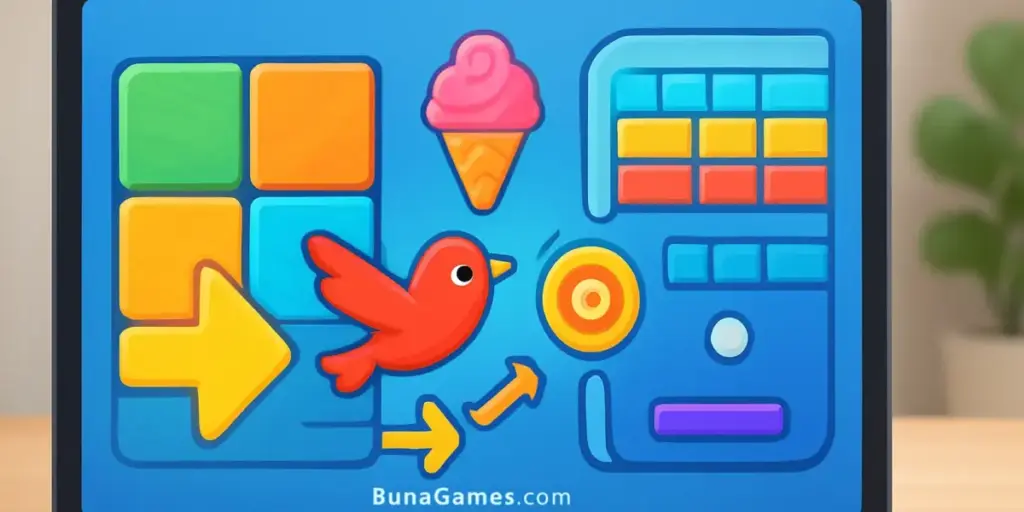
This guide highlights six easy online puzzle games for kids that are available to play in a browser. The selection includes traditional puzzle games, casual games, and arcade-style challenges with puzzle-like thinking. Each one offers a different kind of activity, from arranging objects and planning moves to aiming, reacting, and testing an idea.
These games can work well for short play sessions after school, a relaxed family gaming break, or a quick activity when children want something interactive. Parents can use the short descriptions below to choose a game that matches a child’s age, attention span, and preferred style of play.
What makes an online puzzle game suitable for kids?
The phrase “easy” can mean different things to different players. For one child, an easy game has only a few controls. For another, it means being able to retry a level without feeling rushed. The most approachable games usually have a clear objective and let children learn by trying.
When choosing family-friendly browser puzzle games, consider these simple points:
- Clear goals: Children should be able to understand what they are trying to do after a brief look at the game.
- Accessible controls: A game is easier to enjoy when movement, aiming, or selecting an object feels natural.
- Light challenge: A little thinking is useful, but the game should not feel overwhelming from the beginning.
- Short sessions: Browser games are especially useful when a child wants to play for a few minutes rather than commit to a long adventure.
- Room to experiment: Kids often learn best when they can make a move, see the result, and try again.
The six games below offer different versions of that experience. Some are more focused on logic, while others combine puzzle decisions with familiar arcade action.
1. A Little to the Left
A Little to the Left is a natural starting point for children who enjoy arranging and organizing. Its title suggests a simple idea: small changes in position can make a difference. That kind of activity can be appealing to kids who like sorting, matching, or making a space look just right.
The game can encourage careful observation. Instead of rushing through a level, a child can look at the items on screen and think about how they might fit together. This makes it a useful option for quiet play, especially when a child prefers a slower puzzle experience over fast action.
Parents can introduce this game by asking open-ended questions rather than giving the answer. For example, ask what seems out of place or what arrangement looks most natural. The goal is not only to complete a puzzle but also to let the child explain the choice behind a move.
This is a good pick for children who enjoy visual organization and gentle problem-solving. It can also be a useful choice when you want a browser activity that feels calm and focused.
2. Arrow Puzzle
Arrow Puzzle puts direction at the center of the experience. Arrows are familiar symbols for children, so the basic idea can be easy to understand even before a player has much experience with puzzle games.
Direction-based puzzles can help children practice thinking about sequence and movement. A player may need to consider what will happen after the first action, then decide whether a different order would work better. That creates a gentle introduction to planning ahead without requiring a complicated story or a large set of rules.
One helpful way to play is to encourage children to pause before clicking. Ask them which arrow they want to try first and what they think the next step will be. If the result is not what they expected, the child can use that outcome as a clue for the next attempt.
Arrow Puzzle may suit kids who like patterns, symbols, and small logical challenges. It is also a straightforward choice for families looking for free puzzle games for children that can be opened and explored without much preparation.
3. Atari Breakout
Atari Breakout brings a classic arcade idea into this list. Although it is primarily an arcade game, it also involves decisions about timing, positioning, and responding to what happens on screen. Those elements make it approachable for children who enjoy action but are not ready for complex controls.
The appeal of a simple arcade format is that the objective can be understood quickly. A child can begin by watching the movement on screen, controlling the action, and learning from each attempt. The experience combines quick reactions with a basic sense of planning, since the player needs to pay attention to where the action is heading.
This game can be a good bridge between puzzle play and arcade play. If a child finds traditional logic puzzles too quiet, a classic game with more movement may hold attention better. At the same time, the limited concept keeps the activity easy to explain.
For younger players, an adult can focus on encouraging patience. Missing a target or losing a turn is part of learning how the game responds. Short attempts can help children practice concentration without turning the session into a high-pressure competition.
4. Angry Birds
Angry Birds is another arcade-style choice with puzzle elements. It can appeal to children who enjoy experimenting with aim and watching how one decision changes the result. The game’s familiar bird-themed presentation also gives the activity a playful identity that can make puzzle-style thinking feel more like play.
Aiming games can support simple prediction skills. Before taking an action, a child can think about direction, distance, and what might happen next. The important part is not getting every attempt right. It is learning to adjust the next attempt based on what happened before.
Parents can make the game more thoughtful by asking children to describe their plan first. What are they aiming at? What do they expect to happen? After the attempt, was the result close to what they predicted? These questions turn a quick arcade session into a small exercise in observation and problem-solving.
Angry Birds is a strong option for kids who want a little more energy than a traditional arrangement puzzle. It can also be played as a shared activity, with a parent or sibling taking turns and discussing possible approaches.
5. Bad Ice Cream 1
Bad Ice Cream 1 adds a playful theme to the puzzle category. Ice cream gives the game an immediately recognizable and child-friendly concept, while the puzzle format invites players to think about movement, choices, and how to reach an objective.
This kind of game can be especially enjoyable for children who like character-based challenges. The theme makes the activity feel less like a worksheet and more like an adventure, while the underlying puzzle decisions give the player something to work out.
Children can approach the game by taking one step at a time. Encourage them to notice the layout, identify where they want to go, and consider whether a move will make the next move easier or harder. If they become stuck, a short break can help them return with a fresh idea.
Bad Ice Cream 1 may be a good fit for kids who enjoy a mix of playful presentation and light strategy. It also gives families an opportunity to talk about persistence: a puzzle does not always need to be solved immediately, and trying a new route can be part of the fun.
6. Aqua Bits
Aqua Bits rounds out the selection with a casual game that has an underwater-inspired name and a light, approachable feel. It is a useful choice when a child wants something different from arrows, arranging, or familiar arcade action.
Casual games can be helpful for flexible play because they are easy to introduce. A child can spend a short amount of time exploring the basic idea, then decide whether to continue. That makes Aqua Bits suitable for a quick browser session or as a change of pace between more focused puzzle challenges.
When playing, children can be encouraged to pay attention to the game’s visual cues and try small actions before making a bigger plan. This approach is useful for kids who learn through experimentation. Rather than explaining everything in advance, let the child discover how the game responds and then talk about what they noticed.
Aqua Bits is also a reminder that not every family-friendly browser puzzle game needs to be difficult to be engaging. A simple concept, a cheerful theme, and room to explore can be enough for a satisfying activity.
How to choose the best game for your child
The best choice depends on the type of play your child enjoys. If they like organizing and visual details, begin with A Little to the Left. If they prefer symbols and planning, Arrow Puzzle may be a better match. Children who enjoy quick movement can try Atari Breakout, while those who like aiming and experimenting may prefer Angry Birds.
Bad Ice Cream 1 can suit kids who enjoy playful characters and a more traditional puzzle challenge. Aqua Bits may work well when a child wants a casual change of pace. There is no need to choose only one game. Trying several short games can help children discover which types of challenges they enjoy most.
It is also worth considering the length of the play session. A child who is tired may prefer a calm, simple activity. A child with extra energy may be happier with an arcade-style game. Matching the game to the moment can make browser play more enjoyable for everyone.
Tips for a positive browser gaming session
Even easy online puzzle games for kids can be more enjoyable with a little structure. Before starting, explain that the goal is to explore and have fun, not to solve everything perfectly. This takes away some pressure and gives children permission to learn through mistakes.
- Let children choose between two or three suitable games so they feel involved in the decision.
- Start with a short session and extend it only if the child is still interested and comfortable.
- Encourage children to explain their plan before making a difficult move.
- Treat mistakes as useful information rather than failure.
- Take a break if the game stops feeling fun or becomes frustrating.
- For younger children, stay nearby and help them understand controls or instructions when needed.
These habits can turn a simple browser game into a shared learning activity. Children practice attention, prediction, visual thinking, and persistence while still enjoying a relaxed form of play.
Why simple puzzle games remain a good family choice
Simple puzzle games have an advantage: children can usually understand the basic idea quickly. That leaves more time for playing and less time spent learning menus, complicated systems, or long instructions. Browser access also makes these games convenient for short sessions when a family wants an easy activity.
The six games in this guide offer variety without making the choice difficult. A Little to the Left and Arrow Puzzle focus more directly on puzzle thinking. Atari Breakout and Angry Birds add arcade energy and quick decisions. Bad Ice Cream 1 combines a playful theme with puzzle-style planning, while Aqua Bits offers a casual alternative.
For parents searching for free puzzle games for children, the most important question is not which game is the hardest. It is which game gives a child a clear starting point, an enjoyable challenge, and the freedom to try again. These accessible browser games make it easy to begin there.
Choose one that matches your child’s interests, play for a few minutes, and see what kind of thinking comes naturally. A well-chosen easy game can be a small but enjoyable part of family screen time.