
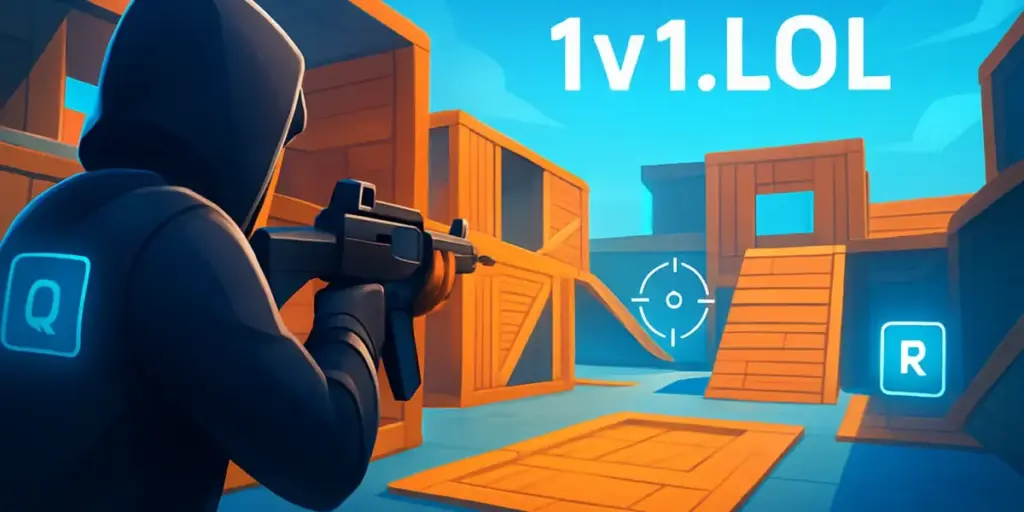
1v1.LOL Building and Aim Guide: Controls, Edits, and Practice Tips
1v1.LOL looks simple at first: move, build, edit, and shoot. In a real duel, however, these skills overlap constantly. A player who aims well may still lose after standing in the open, while a fast builder can waste every advantage with poor movement or rushed edits. The quickest way to improve is to treat the game as a collection of connected habits rather than as one trick to memorize.
This 1v1.LOL building and aim guide covers the fundamentals that matter most for beginners and developing players. You will learn how to organize your controls, place useful structures, edit with purpose, protect yourself while reloading, and practice without repeating the same mistakes. The goal is not to build the most complicated tower. It is to create safe opportunities to see your opponent, land accurate shots, and reset the fight when the situation becomes unfavorable.
If you want to start with a direct browser match, open 1v1.LOL and use the advice below as a checklist during your next sessions.
Start with comfortable controls
Good controls should let you perform basic actions without thinking about every key. Movement, jumping, crouching, building, weapon selection, and editing all compete for your attention. If an important action feels awkward, you will hesitate at exactly the moment when speed and accuracy matter.
Begin by learning the default control layout rather than changing everything immediately. Play a few short practice rounds and notice which actions cause mistakes. Do you press the wrong building key? Do you lose movement while trying to edit? Do you reach for a weapon slot and accidentally stop moving? These observations are more useful than copying a setup that works for another player.
Make changes gradually. Put building pieces and editing actions where your fingers can reach them while your movement hand remains ready. Keep frequently used weapons easy to select, but avoid filling every key with an action you rarely need. A simple layout that you use consistently is usually better than a theoretically faster layout that you keep forgetting.
- Keep movement available while building and editing.
- Choose nearby keys for the structures you place most often.
- Use one reliable key or button for editing rather than several confusing alternatives.
- Test each change in a low-pressure practice session.
- Change one or two controls at a time so you know what actually helped.
Browser performance also affects control quality. If your game feels delayed or your frame rate changes sharply, aiming and editing will feel inconsistent even when your technique is sound. Close unnecessary browser tabs, use a stable connection when possible, and give yourself a few moments to adjust before judging a new sensitivity or keybind.
Build for protection before style
New players often build too much, too quickly. They place walls and ramps because building feels productive, but the structures do not always block the opponent or create a useful angle. The first question should be simple: what danger am I solving with this piece?
A wall can interrupt an opponent’s line of sight. A ramp can help you gain a different angle or make a protected peek. A floor can support movement and reduce the chance of falling or exposing yourself. These basic purposes are more important than building elaborate shapes. Start with a small number of repeatable patterns that you can place while moving.
One useful beginner habit is to build immediately after taking a shot. If the shot connects, the structure gives you time to evaluate the damage and prepare the next move. If the shot misses, the cover protects you from an easy counterattack. This creates a rhythm of peek, shoot, cover, and reposition instead of standing still and trading damage.
Try to keep your structures between you and the opponent whenever you are not actively taking a shot. Building behind yourself can be helpful, but it does not replace awareness of the enemy’s current position. A piece placed in the wrong direction may use time without providing protection. Turn your camera deliberately, identify the threat, and build toward the line of fire.
- Use a wall to stop a direct shot before looking for a new angle.
- Use a ramp when height or a protected peek gives you a clear advantage.
- Keep structures compact enough that you can understand your own position.
- Do not build automatically when you already have a safe angle.
- After building, check whether the structure actually blocks the opponent.
Learn edits as a way to create information
Editing is not only a speed test. Its real value is that it lets you change cover into information and information into a shot. A good edit allows you to see the opponent while limiting how much of your character is exposed. A bad edit opens a large area and gives the other player an easy target.
Start with one or two simple edit shapes. Practice opening a small viewing space, confirming where the opponent is, and closing the structure again. Repeat the motion until you can perform it without losing track of your camera. Speed matters later; control comes first.
When editing in a live fight, avoid opening a piece just because it is available. Ask what you expect to see and what you will do next. If the opponent is likely to be holding the angle, an immediate edit may expose you to a prepared shot. You can instead reposition, place another layer of cover, or wait for the opponent to move.
Resetting an edit is just as important as opening one. Many players focus on creating a window but forget to close it after the opportunity disappears. Make it a habit to reset when you have fired, when your opponent has moved, or when you need to reload. A closed structure gives you control over the next exchange.
Practice edits in stages:
- Place a structure and identify the exact area you want to open.
- Edit the smallest opening that provides useful vision.
- Look through the opening without rushing a shot.
- Close or reset the structure.
- Repeat from different angles while maintaining movement.
Once this feels comfortable, combine an edit with a peek and a single accurate shot. Do not immediately turn the drill into a frantic sequence. The purpose is to connect editing with decision-making, not to produce impressive input speed with no target.
Improve aim by controlling the fight
Aim improvement is often described as moving the crosshair faster, but accuracy usually improves when the fight becomes easier to read. Building and movement help create that clarity. If you are exposed, falling, turning wildly, or reacting to an unexpected angle, even a good sensitivity can feel unreliable.
Begin with crosshair placement. Keep your aim near the area where an opponent is most likely to appear instead of looking at the ground or the sky while moving. When you edit or peek, try to place the crosshair before the opening is complete. This reduces the amount of correction required after the opponent becomes visible.
Use short, controlled adjustments rather than large swings whenever possible. Large movements are sometimes necessary at close range, but constant overcorrection makes shots unpredictable. If you regularly move past the target, lower your sensitivity slightly or focus on stopping the mouse earlier. If you cannot turn quickly enough to follow movement, a small increase may help. Test changes over several matches instead of changing settings after every miss.
Separate aiming errors from decision errors. A missed shot is not always an aim problem. You may have taken the shot from too far away, exposed too much of your body, fired while moving unpredictably, or attacked before your crosshair was ready. After each fight, ask whether the miss came from positioning, timing, crosshair placement, or mechanical control.
- Keep the crosshair near likely enemy locations.
- Peek from cover instead of walking into open space.
- Pause your camera movement briefly when taking a precise shot.
- Use a safe structure to create repeated opportunities to aim.
- Review the reason for a miss before changing sensitivity.
Use movement to make aiming easier
Movement is both defense and preparation. Strafing makes you harder to hit, but random movement can also make your own shots difficult. Use purposeful movement: move to reach cover, change the angle, avoid a predictable line, or create space for a weapon. When you are ready to shoot, make your movement controlled enough that you can place the crosshair accurately.
Do not jump constantly. Jumping can help avoid a shot or change your timing, but repeated jumps make your path predictable and may interfere with aim. Crouching and short strafes can be useful in the right moment, especially when you are holding a protected angle. The important point is to connect each movement choice to the situation rather than pressing movement actions out of habit.
A strong basic sequence is to move behind cover, stop or slow briefly, aim, take the shot, and move again. This does not mean standing still in every fight. It means creating small moments of control inside a faster exchange.
Manage close-range and long-range fights differently
At close range, reaction speed and camera control become more important. Keep structures compact, avoid trapping yourself, and watch for sudden changes in direction. A quick wall or ramp can buy enough time to reset the engagement. Try not to chase an opponent through an edit if you do not know where they are going.
At longer range, patience becomes more valuable. Use cover, expose as little as possible, and wait for a clear shot rather than firing repeatedly at uncertain targets. Building can help you hold a position, but staying in the same place for too long allows the opponent to predict your peek. Take a shot, close the angle, and reposition when necessary.
In either range, information comes first. Before choosing a weapon or building pattern, locate the opponent and understand the available cover. Many lost fights begin with an uncertain push, not with a single inaccurate shot.
A practical practice routine
Unstructured practice can feel busy without producing improvement. A short routine with one clear goal is easier to repeat and measure. You do not need to spend every session training mechanics. Focused drills followed by real matches help you transfer the skill into decision-making.
- Warm up movement. Move around the arena while keeping your camera controlled. Practice turning, strafing, jumping only when useful, and reaching your preferred weapon or building keys.
- Practice basic structures. Place walls and ramps while moving. Check that each piece gives cover or creates an angle. Avoid building patterns you cannot explain.
- Repeat simple edits. Open a small window, look through it, take an imaginary shot, and reset. Concentrate on accuracy and consistency before speed.
- Take controlled shots. Peek from cover and aim at a chosen point. Work on crosshair placement and small corrections instead of firing as quickly as possible.
- Play several real fights. Choose one focus, such as protecting after a shot or resetting edits. Do not try to fix every weakness at once.
- Review one mistake. After a loss, identify the first important error. Was your position open, was the edit too large, or did you rush the shot?
Keep the routine short enough that you can repeat it regularly. Ten focused minutes can be more useful than a long session in which you play while distracted. As a skill becomes automatic, replace it with the next weakness. This creates steady progress without turning every game into a stressful test.
Apply the same habits in related games
The exact pace and situation can change between titles, but the underlying habits transfer well. In 1v1 Lol Battle Royale, use the same principles of checking cover, controlling your movement, and choosing safe opportunities to attack. The lesson is not to copy one build pattern everywhere; it is to keep asking what your current action accomplishes.
Team play adds another layer. In 2v2.io, communication and positioning matter alongside aim. Avoid taking the same angle as your teammate, notice when an opponent is focused elsewhere, and use pressure to create a better opportunity rather than rushing alone. The same peek, cover, and reposition rhythm remains useful, but you also need awareness of your partner’s location.
Even games with a different format can reinforce useful mental habits. A focused round of Connections rewards careful observation instead of the first impulsive choice, which is a valuable mindset when deciding whether to peek or push. Strands can similarly encourage patience and pattern recognition, while 67 Game offers a change of pace when you want to reset between action sessions. These are not substitutes for mechanical practice, but short breaks can help you return to 1v1.LOL with better focus.
Common mistakes that slow improvement
One common mistake is changing controls or sensitivity too often. Every adjustment creates a new learning period, so constant changes make it difficult to tell whether your aim is improving. Test a setup for long enough to build familiarity, then make a measured change if you have a specific reason.
Another mistake is building without a plan. More structures do not automatically mean more safety. If you cannot see the opponent, cannot move freely, or have blocked your own angle, the build may be working against you. Prioritize useful cover and a clear next action.
Rushing edits is also costly. Fast inputs are valuable only when they produce a controlled opening. If you repeatedly edit into an opponent’s crosshair, slow down and practice identifying the target before opening the structure.
Finally, do not measure progress only by wins. Track smaller signs of improvement: surviving after a missed shot, resetting cover correctly, landing a shot from a prepared peek, or recognizing a bad push before it becomes a loss. These habits eventually produce more wins because they make your decisions more consistent.
Final checklist for your next session
- Are your movement, building, weapon, and edit controls comfortable?
- Does every structure provide cover, movement, or a clear angle?
- Can you open and reset a simple edit without losing awareness?
- Is your crosshair ready before you peek?
- Do you protect yourself after firing?
- Are you using movement to reach a purpose rather than moving randomly?
- Can you name the main reason for each missed shot?
- Are you practicing one focused skill instead of changing everything at once?
The best way to improve at 1v1.LOL is to make each action deliberate. Build to protect yourself, edit to gather information, aim from a controlled position, and move with a reason. When those habits become familiar, advanced techniques become easier to learn because you are building them on a stable foundation.