



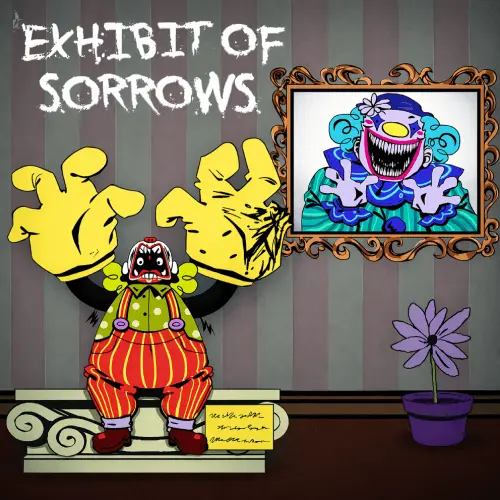
Exhibit of Sorrows
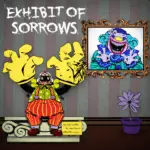
Exhibit of Sorrows is a short horror game built around a curious circus-themed museum where the displays are not merely there to be viewed. Each exhibit is interactive,…
 Works on Desktop & Mobile
Tested By BunaGames
- Test date
- August 11, 2026
- Tested on
- Chrome 150
- Device
- Desktop
- Operating system
- macOS and Windows
- Game loaded successfully
- Yes
- Fullscreen works
- Yes
- Sound works
- Yes
- Save progress
- Local browser storage
- Mobile compatibility
- Partially tested
- Keyboard controls
- Working
- Controller support
- Not detected
- Average loading time
- 4.2 seconds
- Known issues
- Minor delay after entering fullscreen
Exhibit of Sorrows not loading?
- Refresh the page.
- Disable restrictive content blockers temporarily.
- Confirm JavaScript and WebGL are enabled.
- Clear the browser cache.
- Try another modern browser.
- Close unnecessary tabs.
- Switch off VPN if the game server is blocked.
- Use the Report a Problem button if the issue continues.
Related Games








Continue Playing
Daily Challenge

Play 5 minutes today in Exhibit of Sorrows.
Leaderboard
- 1Community rating4.7 ★
- 2Player likes889
- 3Total votes968
- 4Your local progress0%
Your progress is saved locally in this browser. No account required.
 Your progress is saved locally in this browser. No account required.
How to Play
Begin Exhibit of Sorrows by treating the first screen as the entrance to an interactive attraction. Do not rush past introductory text or warnings. The exhibit communicates important information through its instructions, so reading before choosing an interaction is part of solving the game.
- Inspect the current exhibit. Look at the character, object, sign, and any unusual details presented in the scene.
- Read the directions carefully. The museum’s instructions often establish what an exhibit expects from you and what result to watch for.
- Choose a purposeful interaction. Use the available game interaction only after considering what the display is asking you to do.
- Observe the outcome. Notice whether an object appears, a character changes, a route becomes available, or the atmosphere shifts.
- Connect the new clue to other displays. If progress is not obvious, think about which character or attraction could use the new information.
- Recheck earlier areas when needed. An exhibit that was inactive before may behave differently after another puzzle is completed.
The game rewards close observation more than random experimentation. The circus theme can make events feel surreal, but the puzzle logic is usually grounded in the relationships between the exhibits, their instructions, and their characters. If you become stuck, pause and identify the last definite change you caused. That change is often the clearest lead toward the next interaction.
Most importantly, respect the game’s central warning. The clown is not just decoration; the instruction not to upset the clown establishes the danger surrounding the exhibit. Let that warning shape your choices, especially when an option looks deliberately provocative or reckless.
On mobile: use on-screen buttons or gestures when the game supports them.
 On mobile: use on-screen buttons or gestures when the game supports them.
Controls
- ↑Jump
- ← →Move Left / Right
- ↓Crouch
- W / ↑Climb / Interact
- S / ↓Drop / Slide
Exhibit of Sorrows is designed around direct interaction with the game screen. Because browser-hosted versions can present interface prompts differently, follow the on-screen input guidance shown when the game loads. The essential control skill is not speed; it is selecting the right available interaction after you have understood the clue.
| Situation | Best response |
|---|---|
| New exhibit | Read its instruction first |
| New item or change | Check related displays |
| Unclear progress | Review the last outcome |
| Game not responding | Wait for loading to finish |
Take a moment between interactions instead of making several rapid choices. In a puzzle-horror game, a reaction, visual change, or updated scene may be more informative than the action itself. If an option seems unavailable, do not assume it is a failure; it may require progress elsewhere in the museum first.
For the clearest experience, keep the game page visible and avoid switching away while a scene is changing. This helps you catch small details that could be useful in the next puzzle.
Game Progress & Challenges
Why Play This Game?
 Instant PlayPlay instantly in your browser.
 Free to PlayNo hidden fees.
About "Exhibit of Sorrows"
Exhibit of Sorrows is a short horror game built around a curious circus-themed museum where the displays are not merely there to be viewed. Each exhibit is interactive, and every action can reveal a clue, change the scene, or move the unsettling story forward. The central premise is simple but ominous: explore the attraction, follow its instructions, and do not upset the clown.
The game combines escape-game observation with creepy cartoon horror. Instead of relying on fast action, it asks players to examine bizarre characters, notice what has changed, and work out how one exhibit may affect another. Its compact format makes it approachable for players looking for a focused spooky experience rather than a long campaign.
The circus setting gives the puzzles a strong identity. Ordinary fairground ideas become strange museum pieces, while playful-looking figures and displays create tension through their behavior and presentation. Progress comes from paying attention to directions, using available interactions carefully, and treating each newly revealed detail as potentially important.
For players who enjoy eerie puzzle adventures, Exhibit of Sorrows offers a memorable mix of interactive storytelling, character-based problem solving, and escalating atmosphere. It is less about reflexes than curiosity: look closely, test sensible ideas, and remember that the exhibit’s warnings are part of the game.
Gameplay
Exhibit of Sorrows plays as a compact interactive horror puzzle experience. You arrive at a strange circus exhibit and begin exploring its displays one at a time. The basic loop is to inspect what is in front of you, understand the instruction or clue attached to it, interact with the exhibit, and observe the result. A successful action may reveal a new object, alter a character, open another possibility, or make the museum feel more threatening.
The puzzles are tied to the setting rather than presented as detached logic tests. Bizarre circus characters and attractions have their own roles in the exhibit, and their unusual abilities can help advance the game. This makes context important: an item or action that seems pointless in one display may be meaningful after another exhibit changes.
Expect the mood to shift as you progress. The game begins with the appeal of a curious museum visit, but the repeated warning about the clown gives every interaction a consequence. Horror comes from uncertainty, uneasy visual contrast, and the possibility that a seemingly harmless choice may not be harmless at all.
The strongest way to approach the gameplay is methodically. Read every direction before acting, take note of character reactions, and revisit displays after a major event. Because the game is short, its details carry more weight than they would in a large open-world adventure. A small visual change, a new response, or an altered instruction can be the next step.
- Explore interactive circus exhibits in sequence.
- Use clues and character behavior to guide decisions.
- Watch for changes after each important interaction.
- Follow instructions closely while managing the game’s horror tension.
Platform
Exhibit of Sorrows is suited to browser play because its experience centers on focused scene-by-scene interaction rather than lengthy sessions or complex action controls. Open the game page, allow the game to load fully, and keep the browser window active while exploring the exhibit. A stable connection and an up-to-date browser can help the interactive elements respond consistently.
The game’s short format also works well for a single sitting. Since clues, instructions, and scene changes matter, it is best played when you can give the screen your attention rather than treating it as a background game. Headphones are optional, but they can help players who want to focus on the horror atmosphere and any audio cues supplied by the version they are playing.
If the game does not appear immediately, refresh the page once after checking your connection. Avoid repeatedly reloading during active progress unless necessary, since a reload may interrupt the current session. For more titles that run in a web browser, browse the collection of browser games.
How to Play "Exhibit of Sorrows"
Begin Exhibit of Sorrows by treating the first screen as the entrance to an interactive attraction. Do not rush past introductory text or warnings. The exhibit communicates important information through its instructions, so reading before choosing an interaction is part of solving the game.
- Inspect the current exhibit. Look at the character, object, sign, and any unusual details presented in the scene.
- Read the directions carefully. The museum’s instructions often establish what an exhibit expects from you and what result to watch for.
- Choose a purposeful interaction. Use the available game interaction only after considering what the display is asking you to do.
- Observe the outcome. Notice whether an object appears, a character changes, a route becomes available, or the atmosphere shifts.
- Connect the new clue to other displays. If progress is not obvious, think about which character or attraction could use the new information.
- Recheck earlier areas when needed. An exhibit that was inactive before may behave differently after another puzzle is completed.
The game rewards close observation more than random experimentation. The circus theme can make events feel surreal, but the puzzle logic is usually grounded in the relationships between the exhibits, their instructions, and their characters. If you become stuck, pause and identify the last definite change you caused. That change is often the clearest lead toward the next interaction.
Most importantly, respect the game’s central warning. The clown is not just decoration; the instruction not to upset the clown establishes the danger surrounding the exhibit. Let that warning shape your choices, especially when an option looks deliberately provocative or reckless.
Controls
Exhibit of Sorrows is designed around direct interaction with the game screen. Because browser-hosted versions can present interface prompts differently, follow the on-screen input guidance shown when the game loads. The essential control skill is not speed; it is selecting the right available interaction after you have understood the clue.
| Situation | Best response |
|---|---|
| New exhibit | Read its instruction first |
| New item or change | Check related displays |
| Unclear progress | Review the last outcome |
| Game not responding | Wait for loading to finish |
Take a moment between interactions instead of making several rapid choices. In a puzzle-horror game, a reaction, visual change, or updated scene may be more informative than the action itself. If an option seems unavailable, do not assume it is a failure; it may require progress elsewhere in the museum first.
For the clearest experience, keep the game page visible and avoid switching away while a scene is changing. This helps you catch small details that could be useful in the next puzzle.
Can "Exhibit of Sorrows" Unblocked?
Exhibit of Sorrows is a browser game experience, so access depends on whether your current device, browser, and network permit game pages to load. On a normal unrestricted connection, open the game page and wait for its interactive content to finish loading before starting. If the page is slow, give it a moment rather than clicking through before the exhibit is ready.
Some school, workplace, library, or managed networks restrict gaming websites and embedded browser content. Those restrictions are set by the network administrator, and players should follow the rules of the network they are using. Do not attempt to bypass filters, security settings, or access controls.
If a permitted connection still has trouble loading the game, try practical steps such as refreshing the page, checking your internet connection, closing unnecessary browser tabs, or using an updated browser. A temporary loading issue is different from a network block, so testing the page later can also help.
When access is available, the game’s short, self-contained structure makes it a good choice for players who want a creepy puzzle session without committing to a lengthy adventure.
Tips for "Exhibit of Sorrows"
Read before you interact. Exhibit of Sorrows makes instructions part of its puzzle language. A sign, warning, or direction is not just flavor text; it can explain what an exhibit wants and point toward the consequence of a choice. Taking a few seconds to read can save more time than trying every possibility.
Track cause and effect. After every meaningful action, ask what changed. Did a character react differently? Did the exhibit reveal an object? Did the mood, message, or available interaction shift? The newest change is usually more useful than an older detail because it shows that your last decision mattered.
Think in relationships, not isolated rooms. The museum displays are connected by the game’s progression. When you discover something new, consider which other circus character, exhibit, or instruction might relate to it. The answer may not be in the scene where you found the clue.
Do not confuse creepy presentation with random logic. The cartoon horror style is intentionally unsettling, but the game still asks for observation and reasoning. Slow down when an event feels strange. Look for the rule behind it, the instruction that predicted it, or the character ability that makes it relevant.
Respect warnings. The repeated advice not to upset the clown is a major narrative and gameplay signal. When the game highlights a danger, treat it as information. Reckless actions may create a worse situation, while careful choices can preserve progress and reveal more of the exhibit’s intended route.
Use a reset only as a last resort. Before restarting or reloading, review the current display and recall the last action that produced a result. Many apparent dead ends are actually invitations to revisit a previous exhibit with new context.
- Read instructions completely.
- Notice every new visual or behavioral detail.
- Revisit displays after important changes.
- Use character abilities in the context suggested by clues.
- Choose carefully when the clown is involved.
Features "Exhibit of Sorrows"
Exhibit of Sorrows stands out through a concentrated set of horror-puzzle ideas rather than a large map or long list of systems. Its main feature is the interactive circus museum: each display is part of the experience, not simply scenery. Players are invited to explore the attraction and discover how its exhibits, characters, and instructions connect.
- Circus-themed horror setting: A curious museum attraction turns familiar carnival imagery into something uneasy and threatening.
- Interactive exhibits: The displays respond to player actions, creating a progression built on inspection and experimentation.
- Escape-style puzzle flow: Clues, directions, objects, and scene changes guide the path forward.
- Bizarre character interactions: Strange figures are more than background decoration and can contribute unique abilities to progression.
- Creepy cartoon presentation: The visual tone blends playful-looking designs with disturbing circumstances.
- Focused short-form experience: The game delivers its mystery in a compact format that is easy to start in one sitting.
- Instruction-driven tension: Warnings and exhibit rules create suspense because players must decide how literally to take them.
The most valuable feature for puzzle fans is the way story and interaction reinforce each other. The objective is not presented as a generic collection task. Instead, the exhibit’s strange rules and the behavior of its inhabitants supply the context for each next move. This gives successful solutions a stronger sense of discovery.
For horror players, the game offers suspense without requiring action-heavy combat or constant reflex challenges. The threat is rooted in atmosphere, consequences, and uncertainty. For escape-game players, it offers a clear reason to examine every clue: the museum itself is a puzzle, and its exhibits are the pieces.
Best "Exhibit of Sorrows" Similar Games & Top Picks
- Fnaf 2: Play Fnaf 2 online and face animatronic threats in a tense survival horror challenge with no protective doors to close.
- Fleeing The Complex: Play Fleeing The Complex, a stickman prison escape adventure with branching choices, five endings, and dozens of funny fails.
- Bob The Robber 2: Play Bob The Robber 2 online. Sneak past guards and cameras, handle traps, and complete objectives across 10 escape-game levels.
- You vs Homer: Play You vs Homer free online. Hide as Bart, survive Homer, or become the hunter in this tense multiplayer escape game.
- Fury Chase: Play Fury Chase, a fast-paced arcade driving escape game. Pick up the crew, dodge obstacles, and outrun the police.
FAQ - Exhibit of Sorrows
What is Exhibit of Sorrows?
Exhibit of Sorrows is a short horror puzzle game set in a strange circus-themed interactive museum. Players explore exhibits, follow instructions, interact with unusual characters, and uncover the path through a creepy cartoon world. Its gameplay emphasizes observation, puzzle solving, and narrative tension rather than fast action.
Is Exhibit of Sorrows an escape game?
It fits the escape-game style because progress depends on examining scenes, understanding clues, using interactions at the right time, and working out how different exhibits connect. The game also has a horror focus, so its puzzles are presented through an unsettling circus attraction rather than a traditional locked-room setting.
What do you do in Exhibit of Sorrows?
You explore a circus exhibit whose displays are interactive. Read the instructions associated with each attraction, choose actions carefully, and watch for changes in characters, objects, and scenes. Some bizarre characters have unique abilities that can help you advance when used in the right context.
Who made Exhibit of Sorrows?
Exhibit of Sorrows is associated with adayofjoy. The game is presented as an indie horror experience with a compact interactive format and a circus-museum setting.
Is Exhibit of Sorrows scary?
Yes. The game uses horror atmosphere, creepy cartoon imagery, strange characters, and an ominous clown to create tension. Its scares are tied to the unsettling exhibit and the consequences of interactions, so players who dislike clown-themed horror or disturbing situations may find it intense.
How long is Exhibit of Sorrows?
It is described as a short horror game. The exact completion time can vary depending on how quickly you interpret the clues and whether you need to revisit exhibits, but it is designed as a focused experience rather than a long adventure.
What should I do if I get stuck?
Review the last instruction you read and the last action that caused a visible change. Check whether a new object, character response, or altered display relates to an earlier exhibit. Avoid random interactions when possible; the game’s clues, warnings, and character behavior are the best guides to the next step.
Can I play Exhibit of Sorrows for free in a browser?
This page provides Exhibit of Sorrows as an online browser game. Loading and availability can depend on your browser, connection, and any network restrictions in place. If your network blocks game content, follow its access rules rather than trying to bypass them.
More Games Like This
 4 Pics 1 Word
Escape ★ 4.5
4 Pics 1 Word
Escape ★ 4.5
 Jewel Quest
Escape ★ 4.7
Jewel Quest
Escape ★ 4.7
 Woodoku
Escape ★ 4.6
Woodoku
Escape ★ 4.6
 1010 Block Puzzle Game
Escape ★ 4.7
1010 Block Puzzle Game
Escape ★ 4.7
 Hexa Puzzle
Escape ★ 4.7
Hexa Puzzle
Escape ★ 4.7
 1010 Deluxe
Escape ★ 4.6
1010 Deluxe
Escape ★ 4.6
 Screw Puzzle
Escape ★ 4.7
Screw Puzzle
Escape ★ 4.7
 Color Sort
Escape ★ 4.6
Color Sort
Escape ★ 4.6
 Candy Riddles
Escape ★ 4.6
Candy Riddles
Escape ★ 4.6
 Hex Frvr
Escape ★ 4.5
Hex Frvr
Escape ★ 4.5
 Water Sort
Escape ★ 4.6
Water Sort
Escape ★ 4.6
 Brain Test Tricky Puzzles
Escape ★ 4.8
Brain Test Tricky Puzzles
Escape ★ 4.8
 Ball Sort
Escape ★ 4.5
Ball Sort
Escape ★ 4.5
 Bolts And Nuts
Escape ★ 4.6
Bolts And Nuts
Escape ★ 4.6
 Wheres My Water
Escape ★ 4.7
Wheres My Water
Escape ★ 4.7
 Hexagon
Escape ★ 4.6
Hexagon
Escape ★ 4.6
 Cut The Rope 2
Escape ★ 4.4
Cut The Rope 2
Escape ★ 4.4
 Fnaf 2
Escape ★ 4.5
Fnaf 2
Escape ★ 4.5
 Report a Problem
Comments About Exhibit of Sorrows