

How to Play 2048 in Your Browser: A Beginner’s Guide
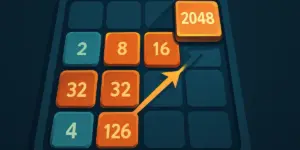
2048 is a simple-looking puzzle game with a surprisingly deep strategy layer. You slide numbered tiles around a grid, combine matching values, and try to create a tile worth 2048 before the board fills up. The rules take only a moment to learn, but building a high score depends on planning several moves ahead and protecting the empty spaces you need to keep playing.
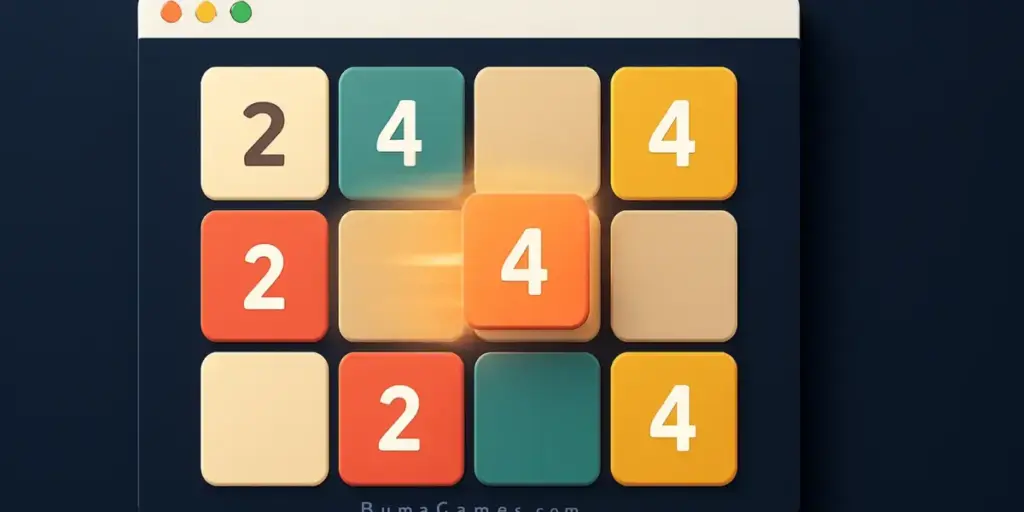
If you are searching for how to play 2048 in browser, you can start immediately without installing a separate application. Open the 2048 game in your browser, wait for the board to load, and use the arrow keys to move the tiles. Each move shifts every tile as far as possible in the selected direction. When two tiles with the same number meet, they merge into one tile with double the value.
This beginner’s guide explains the controls, the merging rules, the best way to approach the opening moves, and the board-management habits that help prevent a game-ending gridlock.
What is the goal of 2048?
The main objective is to combine tiles until you create a tile showing 2048. You begin with a mostly empty four-by-four board and a small number of low-value tiles. Every move changes the position of the existing tiles and adds a new tile to an open space. Your job is to make useful combinations while leaving enough room for future tiles.
The value on each tile represents its current number. A 2 can merge with another 2 to make 4, two 4 tiles make 8, and the same pattern continues through larger values. Reaching 2048 requires a sequence of successful combinations, not one large jump. The important challenge is keeping the board organized while those combinations are created.
You do not have to make a merge on every move. A move can simply shift tiles into a different arrangement. However, each valid move normally introduces another tile, so unnecessary moves reduce the free space available on the board. The best moves either create a valuable merge, improve your tile arrangement, or prepare the board for a useful combination later.
How to start 2048 in your browser
- Open the game: Choose the 2048 game in your browser and allow the board to load.
- Check the controls: Use the left, right, up, and down arrow keys. On some browser versions, touch or swipe controls may also be available.
- Make one careful move: Pick a direction that combines tiles or places them in a safer position.
- Watch the new tile: After a successful move, a new low-value tile appears in an open location.
- Repeat with a plan: Continue combining matching tiles while protecting your preferred corner and keeping the board open.
Before playing quickly, spend a few turns watching what the entire row or column does. Tiles do not move only one square. They slide across all available empty spaces in the chosen direction, then merge when matching tiles become adjacent. Understanding this movement is the foundation of every useful 2048 strategy.
How tile merging works
Two tiles merge only when they have the same value and are pushed together in the same move. For example, moving two 2 tiles toward each other creates one 4 tile. That new tile occupies the position created by the merge, while the original tiles disappear.
A tile cannot merge with a different value. A 2 does not combine with a 4, and a 16 does not combine with an 8. You must first build matching values through smaller combinations. This is why open spaces and orderly rows matter: they give you room to bring similar tiles together.
Multiple merges can happen during a single move, but the order and placement of the tiles matter. A row containing several matching values may combine in stages rather than all at once. Avoid assuming that one swipe will produce the arrangement you imagined. After every move, inspect the full board before selecting the next direction.
It is also important to distinguish between a move that changes the board and one that does not. If all tiles are blocked in the selected direction, the board does not shift. Depending on the version, an unsuccessful direction may not add a new tile. Even so, relying on blocked moves as a routine tactic is risky. Keep your board flexible instead.
The best opening approach for beginners
One of the easiest opening plans is to choose a corner for your largest tile and gradually build around it. Many beginners prefer a bottom or top corner because it gives them a clear mental structure: large values stay near the chosen edge, while smaller tiles are arranged nearby for merging.
For a simple starting pattern, choose one corner and try to keep your biggest tile there. Then favor moves that keep the main row or column organized along that edge. You do not need to follow a rigid sequence of arrows because the new tile appears in a changing open position. Instead, use the corner as a general rule that guides your decisions.
In the early game, focus on creating space rather than chasing the largest number immediately. Combine easy pairs, keep several empty cells available, and avoid scattering medium-sized tiles across the board. A clean board gives you more choices when an awkward new tile appears.
Try not to move toward the direction that pulls your largest tile away from its corner unless there is no safer alternative. Once the large tile is displaced, restoring the preferred arrangement can require several risky moves. A corner strategy is not a guarantee of reaching 2048, but it gives beginners a consistent way to judge whether a move helps or hurts.
Board-management tips for higher scores
- Protect your largest tile: Pick a corner and avoid moving the largest tile away from it whenever possible.
- Keep an empty space: Free cells provide room for new tiles and make future merges easier.
- Build in order: Try to keep larger values near your chosen corner and smaller values closer to the open side.
- Combine deliberately: Do not merge a pair just because the combination is available. Check what the resulting tile will block.
- Look for future pairs: A move that places two equal values near each other may be more useful than an immediate small merge.
- Use the full board view: Inspect every row and column after each move, not only the area where the last merge occurred.
Think of the grid as a limited storage system. Every new tile takes up space, and every merge removes one tile while increasing the value of another. If you allow low values to become separated by larger tiles, you may have trouble combining them later. Good board management keeps related values within reach.
One useful habit is to create a smooth value pattern. The exact numbers will change from game to game, but larger tiles should generally sit closer to your chosen corner while smaller values remain available for preparation. You do not need a perfect mathematical staircase. The goal is to reduce random movement and make your next few choices easier to see.
How to choose each move
Before pressing an arrow key, ask three quick questions. First, does the move create a useful merge? Second, where will the new tile appear and how much space will remain? Third, does the move disturb the corner that holds your largest tile?
If a move answers yes to the first question but creates a nearly full board, it may still be dangerous. A short-term merge is not always a good trade if it blocks the only open route for your larger tiles. Strong 2048 play is based on creating options, not simply collecting the biggest number available at the moment.
When two directions seem equally useful, choose the one that leaves more empty spaces or preserves your main row. Avoid making decisions based only on the most visible pair. Scan the entire board and consider whether a different direction will set up two merges instead of one.
As the game progresses, slow down. Early moves are usually forgiving because the board has plenty of room. Later moves deserve more attention because one misplaced tile can separate a valuable chain or fill the last useful gap. There is no benefit to rushing a turn in a puzzle that rewards observation.
Common beginner mistakes in 2048
Moving randomly: Pressing arrows without a plan may create occasional merges, but it usually scatters the board. Choose a corner and use each direction for a reason.
Chasing every available merge: A visible merge can be a trap if it moves a large tile out of position or removes an important empty space. Consider the next board state before combining.
Using all four directions equally: Beginners often swipe up, down, left, and right with no preferred structure. A more controlled approach limits unnecessary movement and protects the main corner.
Focusing only on the largest number: The biggest tile is important, but smaller tiles are the building blocks that make future merges possible. Do not ignore a low-value pair that could clear space.
Filling the center too early: A crowded center can make it difficult to move tiles toward your chosen corner. Keep the middle as flexible as possible while you build your structure.
Forgetting that every move changes the board: Even when no merge occurs, a slide can alter your spacing and may introduce a new tile. Treat every valid move as a meaningful decision.
Playing too quickly: Fast swipes make it easy to overlook a blocked route or accidental merge. Pause after each move and reassess the whole grid.
A simple strategy for getting a high score
To improve your score, combine small tiles efficiently and avoid losing open space. Start by establishing your preferred corner. During the middle of the game, build larger values along the edge while using the remaining area to prepare smaller pairs. Near the end, prioritize survival and flexibility over immediate points.
Scoring increases when tiles merge into larger values, so a chain of planned combinations is more valuable than isolated moves. For example, creating several 4 tiles can help you build 8s, which can then support 16s and larger values. The process is gradual, and trying to skip steps usually causes congestion.
It can help to think one or two moves ahead. You may not be able to predict exactly where the next tile will appear, but you can prepare a board that remains playable in several possible situations. Leave multiple routes open, keep matching values within reasonable distance, and avoid depending on one perfect move.
Remember that reaching 2048 is not the only measure of progress. A new personal high score, a larger best tile, or a more organized late-game board all show that your decision-making is improving. Review how a game ended and identify the first point where the board became difficult to control. That observation can improve your next attempt.
What to do when the board becomes crowded
When only a few empty spaces remain, stop looking for a spectacular combination and look for a safe move. Identify which direction still allows tiles to slide. Then check whether that direction keeps your largest tile in place or creates an opportunity to clear a row or column.
If you have several possible merges, prefer the one that opens the most room. A single merge that clears a useful area may be better than a larger-looking merge that leaves the rest of the board blocked. Keep an eye on stranded low tiles, because they can occupy spaces needed by your larger values.
Do not panic if the next new tile appears in an inconvenient location. Look for ways to use it as part of a future pair, and avoid spending multiple moves trying to restore a perfect pattern. The board will rarely remain neat for the entire game. A flexible structure is more realistic and more useful than perfection.
Related browser puzzle games to try
If you enjoy the original number-merging format, 2048 Cupcakes offers a different visual theme while keeping the familiar style of combining matching tiles. It can be a comfortable choice when you want the same kind of strategic play with a refreshed presentation.
For a more unusual direction, 2048 Rogue is another related title to explore. Players who like the basic idea of 2048 but want a different take on the puzzle format may enjoy comparing how the experience feels across games.
If you prefer a number-focused challenge with a different goal or presentation, try 67 Game. It provides another way to enjoy compact browser puzzle gameplay when you want a break from building a 2048 tile.
Not every puzzle needs to be about merging numbers. A Little to the Left is a good alternative for players who enjoy arranging, organizing, and solving visual challenges at a calmer pace.
For another tile-inspired option, Cubes 2048.io gives you a different way to approach the familiar 2048-style concept. Trying related games can help you discover whether you prefer careful grid planning, visual organization, or a more active puzzle format.
Final tips for learning 2048
- Choose a corner for your largest tile before the board becomes crowded.
- Use the arrow keys slowly enough to inspect the result of every move.
- Keep empty spaces available instead of making unnecessary swipes.
- Build from small matching pairs toward larger values.
- Protect your main row or column and avoid scattering high-value tiles.
- When the board is crowded, choose the move that creates room and preserves options.
- Treat every failed attempt as practice for recognizing safer board patterns.
Learning how to play 2048 in browser is easy because the controls are simple, but improving your results takes patience. Start with one corner strategy, watch how tiles slide and merge, and make each move with the next board state in mind. With better spacing, fewer random swipes, and more deliberate combinations, you can steadily build higher scores and keep your games alive for longer.