



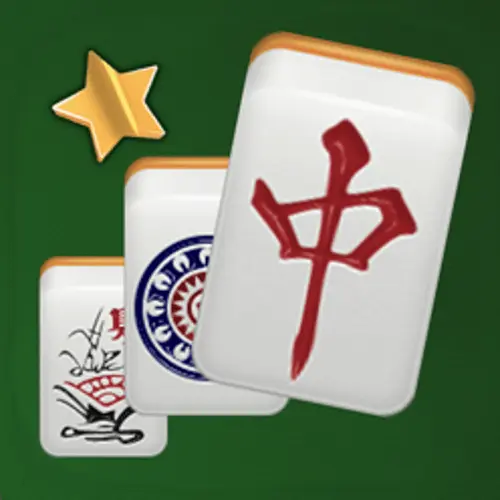
Mahjong
Mahjong is a classic tile-matching puzzle built around observation, memory, and careful move selection. In this browser version, the central goal is clear: find matching pairs of available…
 Works on Desktop & Mobile
Tested By BunaGames
- Test date
- August 14, 2026
- Tested on
- Chrome 150
- Device
- Desktop
- Operating system
- macOS and Windows
- Game loaded successfully
- Yes
- Fullscreen works
- Yes
- Sound works
- Yes
- Save progress
- Local browser storage
- Mobile compatibility
- Partially tested
- Keyboard controls
- Working
- Controller support
- Not detected
- Average loading time
- 4.2 seconds
- Known issues
- Minor delay after entering fullscreen
Mahjong not loading?
- Refresh the page.
- Disable restrictive content blockers temporarily.
- Confirm JavaScript and WebGL are enabled.
- Clear the browser cache.
- Try another modern browser.
- Close unnecessary tabs.
- Switch off VPN if the game server is blocked.
- Use the Report a Problem button if the issue continues.
Continue Playing
Daily Challenge

Play 7 minutes today in Mahjong.
Leaderboard
- 1Community rating4.7 ★
- 2Player likes1.2K
- 3Total votes1.3K
- 4Your local progress0%
Your progress is saved locally in this browser. No account required.
 Your progress is saved locally in this browser. No account required.
Game Progress & Challenges
Why Play This Game?
 Instant PlayPlay instantly in your browser.
 Mobile FriendlyOptimized for all devices.
 Free to PlayNo hidden fees.
About "Mahjong"
Mahjong is a classic tile-matching puzzle built around observation, memory, and careful move selection. In this browser version, the central goal is clear: find matching pairs of available tiles and remove them until the layout is empty. Each choice changes the board, so the game rewards players who look beyond the first pair they notice.
The name Mahjong also refers to a traditional Chinese game played by four people with a tile set. That traditional game involves drawing, discarding, and building melds. This online puzzle uses the familiar tile imagery for a single-player matching challenge instead. Rather than forming a winning hand against opponents, you work through a layered arrangement of tiles at your own pace.
It is an accessible puzzle for a quick break, but it has real strategic depth. A matching pair may be visible without being playable, while an unremarkable move can expose several new options. Scan the layout, identify tiles that are blocking others, and make each removal count. Players looking for focused browser games can enjoy a clean, direct puzzle objective without needing to learn a long list of rules.
Gameplay
Mahjong gameplay revolves around matching identical tiles in pairs. The board begins as a layout of stacked and overlapping tiles, which makes the puzzle more than a simple visual matching exercise. You must locate two tiles with the same symbol or design, confirm that both are available to select, and remove them together. Continue pairing tiles until the board has been cleared.
The key rule is availability. In Mahjong solitaire-style play, a tile is generally usable only when it is not covered by another tile and has an open side. A tile trapped between tiles on both its left and right cannot be taken yet, even if its matching partner is easy to see elsewhere. This is why a board can appear full of pairs while offering only a limited set of productive moves.
Every successful pair changes the structure of the layout. Removing an upper tile can reveal a tile beneath it. Clearing an outside tile can open a side path and free a tile that was previously locked in place. The strongest moves often create several future choices rather than merely removing the nearest match.
Pay attention to tile families as you scan. Character, bamboo, circle, wind, dragon, flower, and season-style designs can appear in Mahjong sets, so recognizing patterns helps reduce hesitation. The practical challenge is to combine visual recognition with board awareness: match the symbols, but also protect your ability to keep making legal moves.
Platform
Mahjong is designed for online play in a web browser. Open the game page, begin the puzzle, and focus on the tile layout without installing a separate program. That makes it a convenient option when you want a traditional-style matching game on a desktop, laptop, tablet, or other device with a modern browser and a suitable internet connection.
The interface is centered on the board, so the important interaction is selecting tiles rather than managing complicated menus. On a computer, players can use a mouse or trackpad. On touch-enabled devices, the same matching task translates naturally to taps.
A larger screen can make small symbols and layered positions easier to inspect, especially when several similar-looking tiles are visible at once. Mobile and tablet play can still suit shorter sessions because the objective remains easy to understand: remove available matching pairs and work toward an empty board.
Browser access also means you can return to the game page whenever you want a calm puzzle session. Take time to examine the available tiles before committing to a pair; Mahjong is more satisfying when the layout is treated as a planning problem, not a speed test.
How to Play "Mahjong"
- Study the full layout first. Look at the top layers, outer edges, and long rows before selecting a tile. Notice where tiles are stacked and which ones appear to block access.
- Find an available tile. Choose a tile that is not covered and has at least one open side. A matching design alone is not enough if the tile remains locked by its position.
- Locate its matching partner. Search for the identical tile among the other available pieces. Compare the symbol or artwork carefully, particularly when tiles belong to the same visual family.
- Select the pair. Choose both matching available tiles to remove them from the board. Their removal creates empty space and may reveal or unlock more tiles.
- Reassess after every move. Do not keep following the same area automatically. Newly exposed tiles can produce better pair options elsewhere on the layout.
- Prioritize access. When several pairs are available, favor the move that opens a covered tile, clears an edge, or releases a tile that was trapped between neighbors.
- Continue until the board is clear. The puzzle is completed by removing all matching pairs. If no selectable matches remain, review the board structure and consider whether an earlier choice limited the remaining options.
The important habit is to think one or two moves ahead. A pair is not equally valuable simply because it is available. Good Mahjong play asks what that pair will uncover, which side it will free, and whether its removal leaves more opportunities than it removes.
Controls
Mahjong uses straightforward point-and-select controls. Choose one available tile, then choose its matching available partner. When the two selections form a valid pair, they are removed from the layout.
| Device | Action |
|---|---|
| Mouse or trackpad | Click each matching tile |
| Touchscreen | Tap each matching tile |
Use deliberate selections when tiles have similar markings. Before choosing a pair, check both its design and its position. A tile can match visually but still be unavailable if another tile covers it or if it is enclosed on both horizontal sides.
There is no need for complex button combinations to understand the puzzle. The skill comes from reading the board accurately, seeing which tiles are open, and selecting pairs in an order that keeps the layout solvable.
Can "Mahjong" Unblocked?
Mahjong can be played directly from this BunaGames page in a browser, giving players a simple way to start a tile-matching puzzle without a separate download. Load the game, inspect the layout, and begin matching available pairs.
Availability can depend on the network, browser settings, device compatibility, or access rules on a school, workplace, library, or shared network. If a game page does not load in a restricted environment, follow the local network rules rather than attempting to bypass them. A personal device or permitted connection may provide a better place for a relaxed session.
For the best experience, use an up-to-date browser and a stable connection. If the board appears small, a larger display or landscape orientation can make it easier to distinguish tile designs and identify open sides. Mahjong is especially suited to short browser sessions because the core interaction is immediate: observe the board, match pairs, and gradually reduce the layout.
Whether you have a few quiet minutes or want to settle into a more thoughtful puzzle, browser-based Mahjong keeps the focus on the tiles and the decisions they create.
Tips for "Mahjong"
Start with a board scan. Before taking the first obvious match, look for tiles on the outer left and right edges and on the highest layers. These positions often control access to tiles beneath or beside them. A quick survey prevents early moves from becoming automatic.
Remove blockers before duplicates when possible. If two identical pairs are available, consider which one releases more space. Clearing a tile that covers another tile, or one that seals an edge, is usually more useful than removing a pair that changes nothing around it.
Keep options open. A strong move creates new legal matches. A weak move may use one of the few available partners for a symbol and leave a harder arrangement behind. When you see several possible pairs, pause and ask which removal opens the most routes through the layout.
Inspect both sides of a tile. Players often notice that a tile is uncovered but forget the side rule. Confirm that it has an open left or right side before relying on it in a plan. This small check avoids wasted attention and makes the board easier to read.
Do not chase one region exclusively. Mahjong layouts are interconnected. Clearing only the top, center, or one edge can hide better moves elsewhere. After each pair disappears, scan the entire board again because a newly exposed tile may connect with a match in a different section.
Slow down around similar symbols. Tile families can contain designs that look alike at a glance. Compare details before selecting, especially when working with characters, circles, bamboo patterns, or decorative tiles. Accuracy matters more than speed in a puzzle where move order affects future access.
Think in sequences. Instead of asking only, “Can I remove this pair?” ask, “What becomes available after I do?” Planning two or three removals ahead turns Mahjong from a reaction game into a more controlled layout-solving puzzle.
Features "Mahjong"
Mahjong combines a familiar tile set with a clear single-player puzzle goal: remove matching pairs until the board is empty. Its appeal comes from the tension between simple interaction and layered decision-making. Selecting two tiles is easy; choosing the right two at the right time is where the challenge develops.
- Classic tile matching: Search for pairs with identical symbols or designs.
- Layered board logic: Tiles can be covered, blocked at the sides, or opened by earlier removals.
- Strategic move order: Each pair changes what is available next, making planning valuable.
- Single-player focus: Play as a personal puzzle rather than a four-player traditional tile contest.
- Browser-friendly access: Start from the game page without a separate installation.
- Touch and pointer interaction: Select tiles with clicks, trackpad input, or taps on compatible devices.
- Calm replayable format: The objective is easy to revisit whenever you want a focused matching challenge.
The major information advantage of Mahjong is that visible matches are not always playable matches. Understanding this distinction makes each game more interesting. You are not merely collecting pairs; you are managing access across the board. A pair near the edge may be strategically important because it frees a trapped tile, while a pair near the center may need to wait.
This balance makes Mahjong suitable for new players and experienced puzzle fans alike. Beginners can learn by matching obvious open tiles, while returning players can improve by tracking blockers, preserving alternatives, and recognizing productive move sequences.
Best "Mahjong" Similar Games & Top Picks
- Mahjong Connect Classic: Clear the board by connecting matching tiles with a path of no more than two turns. Play Mahjong Connect Classic free in your browser…
- Mahjong Link: Play Mahjong Link online for free. Match identical mahjong tiles, clear the board, learn the controls, and improve your connection puzzle strategy.
- Candy Riddles: Play Candy Riddles, a free browser match-3 puzzle with colorful candies, cute cookies, and satisfying three-or-more matches.
- Color Sort: Play Color Sort online for free. Pour and organize mixed colored liquids into matching test tubes in this focused puzzle game.
- Screw Puzzle: Play Screw Puzzle online. Remove bolts, use open holes wisely, and solve satisfying logic challenges in your browser.
FAQ - Mahjong
What is Mahjong in this online game?
This Mahjong game is a single-player tile-matching puzzle. The objective is to remove pairs of matching tiles from the layout until the board is clear. It uses tiles associated with Mahjong, but its play style is different from the traditional four-player game.
How is this different from traditional Mahjong?
Traditional Mahjong is commonly played by four people and involves drawing and discarding tiles to build melds or winning hands. This browser puzzle focuses on matching identical tile pairs on a shared layout. There are no opponents to outscore; the challenge is clearing the board through legal, well-planned removals.
What makes a tile available to remove?
A tile must be free in the layout before it can be selected. In Mahjong solitaire-style puzzles, that generally means it is not covered by another tile and has an open side on either the left or right. A tile positioned between two neighbors may remain blocked even when its matching tile is visible.
How do I play Mahjong on a computer or phone?
On a computer, click an available tile and then click its matching available partner. On a touchscreen device, tap the two matching tiles. If the pair is valid, it is removed from the board. Continue looking for open matching pairs as the layout changes.
Why can’t I select two tiles that look the same?
Matching artwork is only one part of the rule. One or both tiles may still be blocked by a tile above them or by tiles on both sides. Check whether each tile is uncovered and open at least on one horizontal side before trying to use it in a pair.
What is the best strategy for clearing the board?
Prioritize moves that open the layout. Removing an edge tile, a top tile, or a pair that exposes covered pieces often creates more future choices. Avoid making every move based only on the first match you see. After each pair is removed, scan the full board again and look for newly available tiles.
Is Mahjong a game of luck or skill?
It includes an element of layout and opportunity, but careful play matters. Players improve by recognizing open tiles, comparing multiple possible pairs, and choosing moves that preserve options. Looking ahead by even one or two moves can prevent a promising board from becoming restrictive.
Can I play Mahjong for free in a browser?
You can play Mahjong from this BunaGames game page in a browser. The game is built around direct tile selection, so you can begin by loading the page and matching available pairs. For smooth play, use a current browser and a permitted, stable internet connection.
More Games Like This
 4 Pics 1 Word
Mahjong ★ 4.5
4 Pics 1 Word
Mahjong ★ 4.5
 Jewel Quest
Mahjong ★ 4.7
Jewel Quest
Mahjong ★ 4.7
 Woodoku
Mahjong ★ 4.6
Woodoku
Mahjong ★ 4.6
 1010 Block Puzzle Game
Mahjong ★ 4.7
1010 Block Puzzle Game
Mahjong ★ 4.7
 Hexa Puzzle
Mahjong ★ 4.7
Hexa Puzzle
Mahjong ★ 4.7
 1010 Deluxe
Mahjong ★ 4.6
1010 Deluxe
Mahjong ★ 4.6
 Screw Puzzle
Mahjong ★ 4.7
Screw Puzzle
Mahjong ★ 4.7
 Color Sort
Mahjong ★ 4.6
Color Sort
Mahjong ★ 4.6
 Candy Riddles
Mahjong ★ 4.6
Candy Riddles
Mahjong ★ 4.6
 Hex Frvr
Mahjong ★ 4.5
Hex Frvr
Mahjong ★ 4.5
 Water Sort
Mahjong ★ 4.6
Water Sort
Mahjong ★ 4.6
 Brain Test Tricky Puzzles
Mahjong ★ 4.8
Brain Test Tricky Puzzles
Mahjong ★ 4.8
 Ball Sort
Mahjong ★ 4.5
Ball Sort
Mahjong ★ 4.5
 Bolts And Nuts
Mahjong ★ 4.6
Bolts And Nuts
Mahjong ★ 4.6
 Wheres My Water
Mahjong ★ 4.7
Wheres My Water
Mahjong ★ 4.7
 Hexagon
Mahjong ★ 4.6
Hexagon
Mahjong ★ 4.6
 Cut The Rope 2
Mahjong ★ 4.4
Cut The Rope 2
Mahjong ★ 4.4
 Happy Glass
Mahjong ★ 4.7
Happy Glass
Mahjong ★ 4.7
 Report a Problem
Comments About Mahjong