


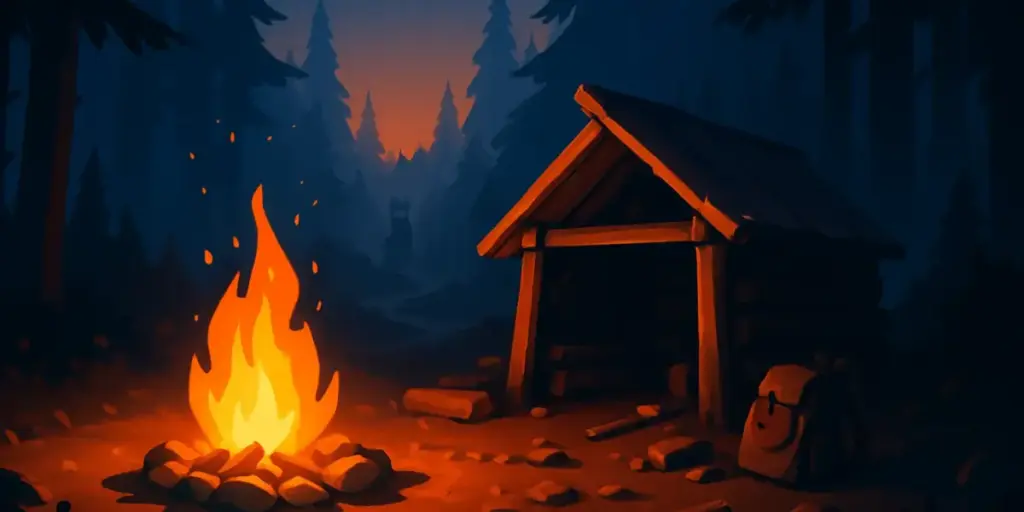
99 Nights in the Forest beginner guide players need a simple plan more than they need risky exploration. The early part of the game is about learning how the forest works, collecting useful materials, preparing before darkness arrives, and choosing when to push toward rescue objectives. If you spend the first day wandering without a purpose, the first night can become much harder than it needs to be.
This guide focuses on practical survival habits for new players. You will learn what to do as soon as a run begins, how to decide which resources deserve your attention, why shelter preparation matters, and how to turn each safe night into progress. The same principles also apply when you play the main 99 Nights in the Forest experience on BunaGames.
The most important idea is to work in phases. Use the opening period to understand your surroundings and collect essentials. Use the middle of the day to build and craft. As night approaches, stop taking unnecessary risks and return to a position you understand. Survival is not only about fighting threats; it is also about avoiding poor decisions when your supplies, health, or visibility are limited.
What should beginners focus on first?
- Learn the immediate area around your starting position.
- Collect basic materials before traveling far from safety.
- Prepare a reliable shelter or camp area before the first night.
- Craft useful survival items instead of spending materials randomly.
- Keep a clear route back to camp whenever you explore.
- Make rescue progress carefully rather than rushing into unknown danger.
These priorities prevent the most common beginner mistake: treating every discovery as a reason to leave camp immediately. Exploration is valuable, but it is much safer when your return route, supplies, and nighttime plan are already in place.
First-night checklist
Your first night should be about staying alive and learning the rhythm of the game. You do not need to complete every objective immediately. Before darkness becomes a problem, try to complete this short checklist:
- Look around the starting area and identify useful resource locations.
- Gather enough basic materials for your first practical crafting needs.
- Choose a camp location that is easy to recognize and return to.
- Build or prepare the shelter options available to you.
- Craft the most useful early items rather than decorative or unnecessary upgrades.
- Return to camp while you can still navigate comfortably.
- Spend the first night observing threats, routes, and safe behavior.
Do not wait until the last moment to return. A beginner often gathers one more resource, investigates one more path, or starts one more task, then discovers that the trip back is more dangerous than expected. Set your own return point before you explore. When you reach it, go home and prepare.
How to survive the first night in 99 Nights in the Forest
First-night survival begins before night arrives. Darkness reduces your ability to read the environment, recognize landmarks, and judge whether a distant movement is safe to approach. That makes preparation more important than bravery. A modest camp with a clear layout is better than a large collection of materials left in scattered locations.
Keep your camp easy to identify. Use the shelter, fire, or other visible features available in the game as navigation points. Avoid building a confusing layout that makes it difficult to find your way back. If you travel away from camp, pay attention to the direction you came from and the landmarks that mark the route.
During the first night, do not assume that every threat must be confronted. If the game gives you room to avoid danger, use that space. Staying near a prepared position, watching movement, and choosing a safe response can preserve health and equipment for the next day. Combat may be necessary at times, but unnecessary combat can consume resources that are more valuable for crafting and rescue progress.
Night is also a learning period. Notice which areas feel unsafe, where you can move without getting trapped, and how quickly you can return to camp. A failed attempt can still teach you something useful if you identify the decision that caused the problem. The goal is to make the second night more organized than the first, not to perform a perfect run immediately.
Resource priorities for new players
Resource gathering becomes easier when you sort materials by purpose. Instead of collecting everything you see, ask what a resource helps you do right now. Does it support shelter, useful equipment, defense, or a rescue objective? If the answer is unclear, leave it until your immediate needs are covered.
| Priority | Why it matters | Beginner approach |
|---|---|---|
| Survival basics | They help you establish a safe starting position. | Gather these before exploring far from camp. |
| Shelter and camp needs | They make returning and preparing for night more manageable. | Build early and keep the layout simple. |
| Useful tools or weapons | They improve your options when exploring or facing danger. | Craft practical upgrades before optional items. |
| Objective-related materials | They support longer-term rescue progress. | Collect them once your immediate safety is stable. |
This priority order is flexible. If an objective is close and safe, you can work on it early. If the route is unfamiliar or dangerous, prepare first and return later. Good survival play is not about following one rigid order; it is about changing the order when the situation demands it.
Keep track of what you already have. Repeatedly collecting the same type of material while ignoring a missing requirement wastes daylight. Before leaving camp, choose a small goal such as finding one needed resource, checking one nearby path, or preparing one crafting step. Focused trips are safer and easier to evaluate than random wandering.
Crafting tips that save time
Crafting should solve a current problem. Early in a run, the best item is usually the one that helps you survive, move safely, protect yourself, or continue toward an objective. Avoid spending limited materials simply because an option is available. A new player can lose an entire day by crafting without considering what will be needed next.
- Craft the items that support your immediate survival plan first.
- Do not use important materials on an upgrade you cannot use effectively yet.
- Check your inventory before gathering more of the same resource.
- Prepare before night instead of beginning a long crafting trip after darkness starts.
- Save enough materials to respond to unexpected problems.
Weapon progression deserves patience. More equipment can help, but equipment alone does not replace awareness, positioning, or a safe retreat route. The related 99 Nights in the Forest: Clicker Weapon Evolution entry is useful for players interested in the weapon-progression side of the theme, while this guide keeps the focus on survival decisions in the main game.
When deciding between crafting choices, think in terms of opportunity cost. If you spend a rare material now, what will you be unable to make later? If an item improves offense but leaves your shelter or escape plan unfinished, it may be better to delay it. This habit becomes especially useful when you are preparing for rescue objectives that require travel beyond the familiar starting area.
Choosing and using a shelter
A good shelter is more than a place to stand. It is the center of your daily routine. You want to recognize it quickly, reach it without a confusing detour, and use the surrounding space to organize your next task. A shelter that is technically safe but difficult to locate can still create problems when you return under pressure.
Keep important activities close together when possible. Gathering, crafting, storing supplies, and preparing for exploration should feel like connected steps rather than separate errands. A simple camp also makes it easier to notice when something is missing. If the environment becomes dangerous, you should know where to retreat and what resources are available.
Do not expand too quickly. Bigger is not always better for a beginner. Extra construction can consume materials and distract you from rescue progress. Improve the area when an upgrade gives you a clear practical benefit, such as easier preparation, better protection, or a more reliable return point.
Exploration and rescue objectives
The rescue theme gives your run a clear long-term direction, but objectives should be approached in stages. First learn the safe area. Then extend your route a little farther. Finally, attempt more demanding objective trips once you have enough supplies and a dependable way back.
When exploring, use the following loop:
- Leave camp with one clear destination or task.
- Check the route as you move instead of sprinting blindly forward.
- Collect only the resources that support the current trip.
- Turn back when your inventory, health, or daylight makes the return uncertain.
- Use what you learned to prepare a better attempt next time.
If your main goal is finding every child, the related 99 Nights in the Forest – Find All the Kids! game highlights that rescue-focused objective. In the main survival experience, remember that progress is safer when each search trip is planned. Do not let the excitement of a possible discovery pull you far beyond the point where you can safely return.
Mark the difference between a scouting trip and a rescue trip. A scouting trip is for learning routes and identifying risks. A rescue trip is for completing a specific objective with enough preparation to finish it. Mixing the two can lead to confusion, especially when you begin exploring an unfamiliar section of the forest without the supplies needed for a full return journey.
Handling dangerous enemies
Enemy-focused situations are easier when you think about distance, escape options, and timing. Avoid being cornered in an unfamiliar area. Before approaching a suspicious location, consider where you will retreat if the situation becomes unsafe. If you cannot identify an escape route, the better choice may be to return after improving your preparation.
The Skinwalker Deer theme is represented by 99 Nights in the Forest – Skinwalker Deer. Whether you are learning about a particular threat or simply practicing caution, the useful lesson is the same: do not let curiosity remove your safety margin. Observe first, avoid needless exposure, and keep enough room to react.
Playing with another person can also change how you manage risk. A team can divide attention and share responsibilities, but teamwork only helps when everyone understands the plan. The 99 Nights in the Forest with Noob and Pro! entry fits the multiplayer and skill-contrast side of the game’s theme. In a cooperative run, decide who gathers, who watches the route, and when the group returns to camp.
Do not assume a teammate will automatically fix poor preparation. Groups can also become separated, spend resources too quickly, or make different decisions about when to retreat. Use simple communication: identify the destination, agree on a return point, and avoid pushing farther if the group loses track of one another.
Common beginner mistakes
- Exploring too far too soon: Learn the nearby area before committing to long journeys.
- Ignoring the time of day: Start returning before darkness turns a short trip into a dangerous one.
- Crafting without a plan: Save materials for items that support survival and progression.
- Building an awkward camp: Keep your shelter easy to recognize and reach.
- Fighting every threat: Avoid danger when combat does not provide a clear benefit.
- Carrying no reserve: Keep enough resources and equipment for unexpected problems.
- Chasing objectives blindly: Scout first, then attempt the objective with a prepared route.
Another common mistake is treating failure as wasted time. A failed night can reveal a dangerous route, a poor crafting decision, or a navigation problem. After a setback, change one thing at a time. Improve the camp, shorten the route, gather a different resource first, or return earlier. Small adjustments make the next attempt easier to understand.
A simple progression plan
For your first few attempts, use a repeatable routine. On the opening day, gather essentials and prepare the camp. During the first night, focus on survival and observation. On the next day, expand your knowledge of nearby routes and collect materials for useful improvements. After that, begin making longer trips toward rescue objectives, but only when your return plan is reliable.
As you become comfortable, you can take more calculated risks. You may travel farther, combine resource gathering with objective progress, or test stronger enemies and less familiar areas. The key word is calculated. A risk is worthwhile when you understand what you might gain and what you will lose if the attempt fails.
The related 99 Nights in the Forest with Emma game offers another themed way to engage with the forest setting. For the main title, however, steady preparation remains the foundation of progress. Keep your priorities clear: survive the night, improve your options, and make the next rescue attempt from a stronger position.
Final tips for a successful run
- Return to camp earlier than you think you need to, especially while learning.
- Use nearby landmarks to build a mental map of the forest.
- Give every trip a purpose and avoid random detours.
- Craft for the current situation, not simply because a recipe is available.
- Protect your health and supplies for objectives that matter.
- Use each night to learn the environment and improve the next day’s plan.
- When playing with others, agree on destinations and retreat points before leaving.
The best answer to how to survive the first night in 99 Nights in the Forest is preparation. Gather nearby resources, build a recognizable shelter, craft only what helps, and stop exploring before the route home becomes uncertain. Once those habits become automatic, rescue objectives feel less overwhelming and each new night becomes an opportunity to make controlled progress.
Start with the main 99 Nights in the Forest game, follow a careful first-night routine, and treat exploration as a series of manageable steps. Survival comes from combining resource awareness, sensible crafting, a dependable camp, and the discipline to retreat when the situation changes.