


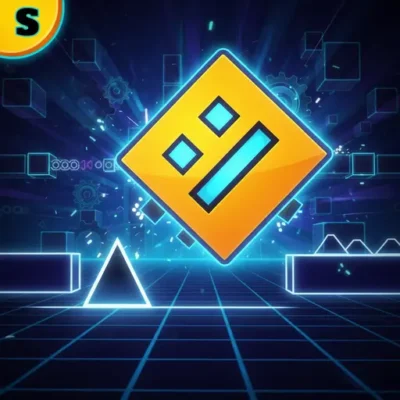
Geometry Dash Scratch
Geometry Dash Scratch is a Geometry Dash-style platform game experience associated with projects made by the Scratch community. The name is useful for players looking for a browser-playable…
 Works on Desktop & Mobile
Tested By BunaGames
- Test date
- August 16, 2026
- Tested on
- Chrome 150
- Device
- Desktop
- Operating system
- macOS and Windows
- Game loaded successfully
- Yes
- Fullscreen works
- Yes
- Sound works
- Yes
- Save progress
- Local browser storage
- Mobile compatibility
- Partially tested
- Keyboard controls
- Working
- Controller support
- Not detected
- Average loading time
- 4.2 seconds
- Known issues
- Minor delay after entering fullscreen
Geometry Dash Scratch not loading?
- Refresh the page.
- Disable restrictive content blockers temporarily.
- Confirm JavaScript and WebGL are enabled.
- Clear the browser cache.
- Try another modern browser.
- Close unnecessary tabs.
- Switch off VPN if the game server is blocked.
- Use the Report a Problem button if the issue continues.
Continue Playing

Daily Challenge

Play 5 minutes today in Geometry Dash Scratch.
Leaderboard
- 1Community rating4.7 ★
- 2Player likes1.1K
- 3Total votes1.2K
- 4Your local progress0%
Your progress is saved locally in this browser. No account required.
 Your progress is saved locally in this browser. No account required.
Game Progress & Challenges
Why Play This Game?
 Instant PlayPlay instantly in your browser.
 Mobile FriendlyOptimized for all devices.
 Free to PlayNo hidden fees.
About "Geometry Dash Scratch"
Geometry Dash Scratch is a Geometry Dash-style platform game experience associated with projects made by the Scratch community. The name is useful for players looking for a browser-playable take on the familiar obstacle-course format: guide a small character through a compact level, react to hazards, and build a cleaner run through repetition.
The Scratch connection matters. Scratch is an online creative platform where people make interactive games, animations, and stories, so Geometry Dash Scratch can describe a community-made adaptation rather than one single, fixed official release. Different Scratch projects may use their own level layouts, sprites, visual themes, obstacle spacing, and difficulty balance. That creative variation is part of the appeal, but it also means players should judge the version in front of them by its own instructions and level design.
At its core, the search intent is straightforward: players want a quick, readable platform challenge with precise timing. Watch the route, identify the safe path, learn where the danger begins, and try again with better rhythm. It is a good choice for short sessions because progress comes from recognizing patterns rather than memorizing a large world or managing a complicated system.
For more quick-to-start titles, BunaGames also offers a broad collection of browser games.
Gameplay
Geometry Dash Scratch centers on the platform-game tension between movement and timing. A level is designed as a sequence of decisions: when to move, when to avoid an obstacle, how long to hold an input if the project uses held movement, and when to stay calm instead of reacting too early. The immediate objective is normally to reach the end of the current course without colliding with its hazards.
Unlike exploration-focused platform games, this style puts the route itself at the center of play. Spikes, walls, gaps, raised platforms, and other visual barriers create a readable path, but reading it once is not always enough. A successful attempt often depends on converting what you saw during an earlier failure into a precise response on the next attempt. That learn-and-retry loop is the main skill test.
Scratch-made Geometry Dash projects can differ from one another, so do not assume that every version has identical physics, stages, music, checkpoints, or character modes. Some projects are close recreations, while others are remixes or original variations built around the same recognizable platforming idea. The best approach is to spend the first attempts learning this version's pace and feedback.
- Read ahead: focus on the next obstacle group, not only the character.
- Learn the spacing: repeated hazards usually reveal a consistent timing pattern.
- Use failures as information: note whether you acted too soon, too late, or with too much movement.
- Respect transitions: a safe landing may be followed immediately by another hazard.
The result is a compact arcade platform challenge where consistency matters more than luck. Each restart can make the level feel more predictable, especially after you identify its visual cues and rhythm.
Platform
Geometry Dash Scratch is best understood as a browser-oriented Scratch game experience. Scratch projects are made for online interactive play, and the Geometry Dash Scratch label is commonly connected with Geometry Dash-style games created by that community. For players, the practical advantage is direct access through a web game page rather than a lengthy installation process.
Because community projects can be built differently, the exact presentation may vary by version. One project may emphasize handmade sprites, another may use a different arrangement of levels, and another may be a remix of an earlier creation. The game window itself is the reliable place to confirm the controls, start method, available stages, sound behavior, and any version-specific options.
For the smoothest session, use an up-to-date browser, leave enough room for the game window, and close unnecessary tabs if the project feels slow. Platform timing is easier to judge when animation and input response are stable. If the game includes a full-screen option, it may also make upcoming hazards easier to see, though the available display options depend on the project.
How to Play "Geometry Dash Scratch"
Start by treating the opening of the level as a practice read, not a performance test. Geometry Dash-style platform challenges reward familiarity. Before trying to play perfectly, observe the character's movement, the first obstacle, and the response that the game expects from you. Look for an on-screen instruction panel, a start prompt, or a control note supplied by the project.
- Open the game and begin the level. Wait for the project to finish loading before judging its timing.
- Check the displayed instructions. Scratch projects can use different input setups, so follow the controls shown in the game.
- Watch the first hazard sequence. Notice the distance between the starting point, obstacles, and safe landing areas.
- Make deliberate inputs. Avoid repeated panic presses; one planned action is easier to evaluate than several rushed ones.
- Restart with a specific adjustment. If you hit an obstacle, decide whether the previous input was early, late, too long, or unnecessary.
- Extend your focus gradually. First master the opening pattern, then add the next section to your mental route.
A useful rhythm is observe, attempt, review, and retry. On the first run, learn where the course becomes dangerous. On the second, concentrate on the opening sequence. On later attempts, preserve that successful opening while learning the next unknown section. This prevents the common problem of changing every action after each failure.
Keep your eyes slightly ahead of the character. Looking directly at the avatar can make your response late because you notice obstacles only when they are already close. Instead, use the terrain and hazard shapes as advance signals. With practice, a difficult-looking sequence becomes a familiar pattern of visual cues and controlled reactions.
Controls
Controls are project-specific in Geometry Dash Scratch. Community-made Scratch games do not always share one universal keyboard, mouse, or touch layout, so the most accurate instruction is the one displayed inside the version you are playing. Check the game screen before starting a serious attempt, especially if you have played another Geometry Dash-style Scratch project before.
| Check | Why it helps |
|---|---|
| Start prompt | Confirms how a run begins |
| Control note | Shows accepted input |
| Restart behavior | Speeds up practice |
| Sound setting | Helps test focus |
Once you know the active input, use a consistent technique. Make purposeful presses rather than tapping randomly, and avoid changing your hand position during a difficult sequence. If a control seems unresponsive, first allow the project to finish loading and make sure the game area has focus. Browser timing games are easiest to learn when your input method remains the same from attempt to attempt.
Can "Geometry Dash Scratch" Unblocked?
Players often search for an unblocked version when they want a Geometry Dash-style game that opens in a browser without a separate download. Access, however, can depend on the network, browser settings, device policy, and whether a school, workplace, library, or public connection restricts gaming or Scratch-related content.
BunaGames can be opened as part of a normal browser gaming session, but it is important to respect local network rules. If a page is blocked by an administrator or filtering system, do not try to bypass those restrictions. A better option is to play later on a permitted personal connection or choose a suitable activity approved for that location.
When access is available, browser play is convenient for short platform sessions: load the game, check its instructions, and begin learning the level. If the project does not start immediately, refresh only after giving the game time to load, confirm that scripts are allowed in the browser, and make sure the game window is selected before using controls.
The key benefit is low-friction access, not a guarantee that every network will permit every game page. Availability ultimately depends on the environment where you play.
Tips for "Geometry Dash Scratch"
The strongest Geometry Dash Scratch skill is not fast tapping; it is controlled anticipation. Most mistakes happen because a player reacts to the obstacle currently on screen instead of preparing for the obstacle that is about to arrive. Train yourself to scan one or two hazard lengths ahead, then make the input at the moment your planned route requires.
- Use the first attempts to map danger. Learn the obstacle order before demanding a full clear from yourself.
- Change one thing at a time. After a failure, adjust timing or input length, not both at once. This makes the cause of the mistake clearer.
- Find visual landmarks. A platform edge, a repeated spike group, or a change in scenery can become a cue for your next action.
- Keep a steady hand position. Consistent posture reduces accidental double presses and late reactions.
- Do not overcorrect. If you have learned a section, preserve its working timing while practicing the next section.
- Take short resets. A brief pause after several rushed attempts can restore focus better than continuing on autopilot.
Pay special attention to obstacle chains. A jump or movement that clears the first hazard may leave you poorly positioned for the second. Rather than celebrating the first safe landing, immediately read the next piece of terrain. This is why experienced players seem calm: they are already planning beyond the visible success.
If the project uses sound, listen for any recurring beat or cue that helps you establish a rhythm, but rely on the visual route first. Community-made versions may not share the same audio design, and some players prefer muted practice. The transferable skill is matching your actions to the level's spacing.
Finally, measure progress in segments. Reaching a new obstacle consistently is real improvement even if the level is not finished yet. Once the opening becomes automatic, you have more attention available for the unknown middle and end of the course.
Features "Geometry Dash Scratch"
Geometry Dash Scratch brings the recognizable appeal of a Geometry Dash-style obstacle platformer into the creative Scratch ecosystem. Its most important feature is the repeatable challenge loop: enter a level, identify a hazard pattern, make an attempt, and improve your response on the next run. That structure works well for players who enjoy direct objectives and visible skill growth.
- Scratch community context: the label is connected with Geometry Dash-style games made by Scratch creators.
- Platform challenge focus: movement, obstacle avoidance, route reading, and timing are the central ideas.
- Short retry loop: unsuccessful attempts can immediately teach the next adjustment.
- Creative variation: projects may use different handmade visuals, layouts, remixes, and level designs.
- Browser-oriented access: the experience is designed around online interactive play.
- Pattern-based progression: success comes from learning sequences and executing them consistently.
The community-made nature of the game is also an important distinction. “Geometry Dash Scratch” is not necessarily a promise of one standardized content set. It can point players toward a family of related creations that share a recognizable inspiration while differing in presentation and design choices. That is useful for players who want fresh obstacle arrangements rather than a single unchanging course.
For a practical playing experience, the most valuable features are clarity and replayability. Clear hazards let players understand why a run ended. Rapid retries let them test a new idea. Repeated patterns create a sense of mastery when a previously difficult section becomes routine. Those elements turn a simple platform course into a focused arcade exercise in attention, timing, and persistence.
Best "Geometry Dash Scratch" Similar Games & Top Picks
- Dig Dug 2: Play Dig Dug 2 online and clear island rounds in the 1985 Namco arcade sequel with overhead action and strategic enemy encounters.
- Big Tower Tiny Square: Play Big Tower Tiny Square online. Climb past lava, bullets, and traps to reach the top and rescue the stolen pineapple.
- Stickman Parkour: Play Stickman Parkour online and master 30 side-scrolling levels filled with spikes, water, ropeways, keys, chests, and platforms.
- Meat Boy: Play Meat Boy online for free on BunaGames. Enjoy fast platform timing and precision jumps directly in your browser with quick access and simple…
- Papa Louie 2: Play Papa Louie 2: When Burgers Attack! online and explore Munchmore in a food-fighting platform rescue adventure.
FAQ - Geometry Dash Scratch
What is Geometry Dash Scratch?
Geometry Dash Scratch refers to Geometry Dash-style games and projects made within the Scratch community. Scratch is an online creative platform for interactive games, stories, and animations. The phrase can describe a community-made adaptation or collection of related projects rather than one universally identical release.
Is Geometry Dash Scratch an official Geometry Dash game?
The available information identifies it with Scratch community creations and Geometry Dash-style projects. It should therefore be treated as a Scratch-made or community-made experience, not assumed to be a single official standardized version. Individual projects can have their own art, level design, and mechanics.
Can I play Geometry Dash Scratch in a browser?
Yes, the experience is associated with online Scratch projects and browser-based interactive play. Open the game page, wait for it to load, and follow any instructions shown inside the game window. Exact behavior can vary by project and browser.
What are the controls for Geometry Dash Scratch?
There is no one control scheme confirmed for every Scratch-made Geometry Dash project. Check the on-screen instructions in the version you are playing before beginning. A project may provide its own start prompt, keyboard guidance, mouse guidance, or another input note.
Why does the game feel difficult at first?
Geometry Dash-style platform challenges are built around precise obstacle timing and repeated attempts. Early failures are useful because they show where the route becomes dangerous. Focus on learning one short segment at a time, then combine the segments into a longer successful run.
Are all Geometry Dash Scratch levels the same?
No. Scratch creators can make original projects, remixes, recreations, and different level arrangements. Visuals, obstacle placement, movement behavior, sound, and available stages may vary. Always use the current game's own instructions and feedback as the guide for that version.
Can I play an unblocked version at school or work?
Whether a game page is accessible depends on local network rules, device settings, and content filters. Do not attempt to bypass restrictions. If gaming content is not permitted on a network, play on an approved connection at an appropriate time instead.
What is the best way to improve?
Practice with a purpose. Watch for visual landmarks, look ahead to the next hazard, and make one timing adjustment after each failure. Avoid random repeated inputs. Consistent attempts reveal the level's pattern and help you turn a difficult opening into a reliable routine.
More Games Like This
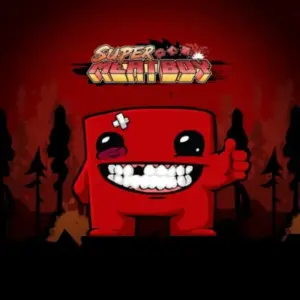 Meat Boy
Platform ★ 4.4
Meat Boy
Platform ★ 4.4
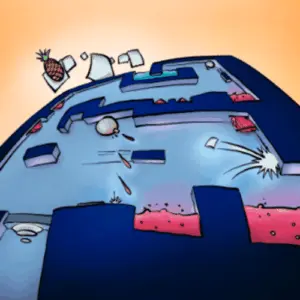 Big Tower Tiny Square
Platform ★ 4.5
Big Tower Tiny Square
Platform ★ 4.5
 Dig Dug 2
Platform ★ 4.4
Dig Dug 2
Platform ★ 4.4
 Papa Louie 2
Platform ★ 4.7
Papa Louie 2
Platform ★ 4.7
 Geometry Dash Subzero
Platform ★ 4.5
Geometry Dash Subzero
Platform ★ 4.5
 Vex 7
Platform ★ 4.6
Vex 7
Platform ★ 4.6
 Fire And Water
Platform ★ 4.6
Fire And Water
Platform ★ 4.6
 I Am Cat
Platform ★ 4.7
I Am Cat
Platform ★ 4.7
 Pixel Slime
Platform ★ 4.7
Pixel Slime
Platform ★ 4.7
 Stickman Climb 2
Platform ★ 4.6
Stickman Climb 2
Platform ★ 4.6
 Om Nom Jump
Platform ★ 4.6
Om Nom Jump
Platform ★ 4.6
 G-Switch 4
Platform ★ 4.7
G-Switch 4
Platform ★ 4.7
 Tower Of Destiny
Platform ★ 4.7
Tower Of Destiny
Platform ★ 4.7
 Parkour Block 3D
Platform ★ 4.4
Parkour Block 3D
Platform ★ 4.4
 Super Mario Run
Platform ★ 4.7
Super Mario Run
Platform ★ 4.7
 Jump Only
Platform ★ 4.6
Jump Only
Platform ★ 4.6
 Candy Jump
Platform ★ 4.5
Candy Jump
Platform ★ 4.5
 Sonic 2
Platform ★ 4.4
Sonic 2
Platform ★ 4.4
 Report a Problem
Comments About Geometry Dash Scratch