


Tiles Hop
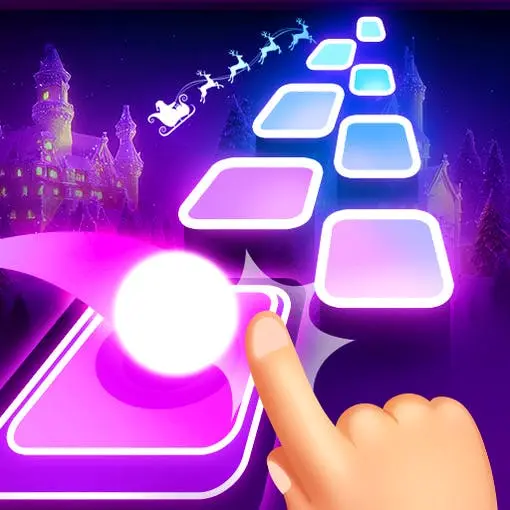
Tiles Hop is a music-driven arcade game built around one clear challenge: guide a bouncing ball across a trail of floating tiles without letting it fall. The ball…
 Works on Desktop & Mobile
Tested By BunaGames
- Test date
- June 14, 2026
- Tested on
- Chrome 150
- Device
- Desktop
- Operating system
- macOS and Windows
- Game loaded successfully
- Yes
- Fullscreen works
- Yes
- Sound works
- Yes
- Save progress
- Local browser storage
- Mobile compatibility
- Partially tested
- Keyboard controls
- Working
- Controller support
- Not detected
- Average loading time
- 4.2 seconds
- Known issues
- Minor delay after entering fullscreen
Tiles Hop not loading?
- Refresh the page.
- Disable restrictive content blockers temporarily.
- Confirm JavaScript and WebGL are enabled.
- Clear the browser cache.
- Try another modern browser.
- Close unnecessary tabs.
- Switch off VPN if the game server is blocked.
- Use the Report a Problem button if the issue continues.
Related Games
Continue Playing

Daily Challenge

Play 7 minutes today in Tiles Hop.
Leaderboard
- 1Community rating4.6 ★
- 2Player likes667
- 3Total votes735
- 4Your local progress0%
Your progress is saved locally in this browser. No account required.
 Your progress is saved locally in this browser. No account required.
How to Play
Start a Tiles Hop run and watch the ball’s first few bounces before making large adjustments. The opening tiles help establish the route’s direction and the pace of the music. Your objective is to keep guiding the ball so that every bounce lands on the next available tile.
- Read the route. Look beyond the current tile and locate the next landing point. Notice whether the path continues straight, drifts to one side, or changes direction sharply.
- Follow the ball’s momentum. The ball keeps bouncing forward, so do not wait until it is already leaving a tile to decide where to move. Begin lining up the next landing early.
- Use controlled adjustments. Move enough to reach the target tile, but avoid exaggerated corrections. Small, deliberate changes are easier to refine during a fast sequence.
- Let the music guide your attention. The rhythm can help you settle into the bounce pattern. Use it as a timing reference while keeping your eyes on the upcoming tiles.
- Recover calmly after a difficult turn. A sharp route change can make players overcorrect. Once the ball lands safely, center your focus on the following tile instead of continuing the previous correction.
- Repeat and improve. If the ball falls, restart with a specific adjustment in mind. For example, aim to look farther ahead, react sooner to side movement, or reduce unnecessary steering.
The most effective approach is proactive rather than reactive. A player who recognizes the next two tiles has more time to make a smooth movement than a player who waits for each bounce to happen. With practice, the route begins to feel less like separate targets and more like one flowing line through the music.
On mobile: use on-screen buttons or gestures when the game supports them.
 On mobile: use on-screen buttons or gestures when the game supports them.
Controls
- ↑Jump
- ← →Move Left / Right
- ↓Crouch
- W / ↑Climb / Interact
- S / ↓Drop / Slide
Tiles Hop uses simple directional guidance rather than a large set of separate actions. The ball’s bouncing movement is the constant part of the game; your task is to direct its path toward the tiles ahead.
Because browser game builds can present their input prompts differently, check the game screen when it loads for the active control instructions. The important control principle remains the same regardless of the available input method: guide the ball horizontally with measured movements so it reaches each next tile.
- Guide: Move the ball toward the next tile in the route.
- Time movement: Begin adjusting before the ball reaches the edge of its current tile.
- Fine-tune: Reduce movement once the ball is aligned with the landing zone.
- Restart: Begin another attempt after a missed landing and apply what you learned.
For better control, avoid treating every tile as an emergency. Keep movements calm when the route is straight, then prepare earlier for turns. This reduces the chance of moving past the target tile when the ball is already traveling at speed.
Game Progress & Challenges
Why Play This Game?
 Instant PlayPlay instantly in your browser.
 Free to PlayNo hidden fees.
About "Tiles Hop"
Tiles Hop is a music-driven arcade game built around one clear challenge: guide a bouncing ball across a trail of floating tiles without letting it fall. The ball moves forward through a colorful course, while each successful landing keeps the run alive and connects the action to the song’s rhythm.
The central idea is easy to understand, but the timing becomes demanding quickly. Tiles may appear closer together, shift across the path, or require faster corrections as the music and movement build momentum. A good run depends on reading the next tile early, keeping the ball centered, and making smooth direction changes instead of reacting too late.
Its gameplay sits between a rhythm game, a reflex challenge, and a score-focused arcade experience. Music gives the course a natural pulse, while the tile path turns that pulse into a practical navigation test. Rather than memorizing a long list of commands, players focus on one continuous task: make each bounce land where it needs to land.
This browser version is suited to quick sessions, repeat attempts, and gradual improvement. Whether you want a short beat-based challenge or a game that rewards calm concentration, Tiles Hop makes every tile landing matter.
Gameplay
Tiles Hop centers on a ball that repeatedly bounces forward across individual music tiles. Your responsibility is to guide that ball toward the next safe landing area. Missing the tile path ends the attempt, so the game creates constant pressure to look ahead while staying aware of the current bounce.
The music is more than background decoration. It gives the movement a rhythmic frame that can help players anticipate the pace of the course. Each tile functions as part of the route through a song, making the action feel connected to the beat instead of being a simple platform sequence. When your movement matches the flow, it is easier to make measured corrections and avoid sudden oversteering.
A typical run asks you to do several things at once:
- Track the ball’s position as it moves from bounce to bounce.
- Identify the next tile before the ball reaches the edge of the current one.
- Adjust direction carefully to line up the next landing.
- Maintain control as the route becomes faster or less forgiving.
- Continue the sequence for as long as possible to improve your performance.
The useful skill is not simply moving quickly. It is choosing the right amount of movement at the right moment. Big, rushed corrections can send the ball beyond a tile, while late corrections leave too little room to recover. The strongest players treat the course as a chain of landing zones, planning one or two tiles ahead instead of staring only at the ball.
That balance gives Tiles Hop its replay value. A failed run usually reveals a specific problem—late recognition, excessive movement, or lost rhythm—so the next attempt can be more controlled.
Platform
Tiles Hop is known as a music ball game that has appeared in mobile app formats, including Android and iOS listings. The game concept also works naturally in an online format because its core interaction is immediate: guide the bouncing ball across the tile route and keep the run going.
On BunaGames, the focus is the browser-play experience. Open the game page, start the available game build, and concentrate on the tile path rather than on a lengthy setup process. This makes it practical for players looking for a quick rhythm challenge from a compatible web browser.
The game is especially suited to short play periods because each attempt has a clear beginning, a clear goal, and an instant reason to try again after a miss. You can use it as a brief reflex break or spend longer improving your consistency across music-based tile courses.
For more quick-play options, you can also explore online games on BunaGames.
How to Play "Tiles Hop"
Start a Tiles Hop run and watch the ball’s first few bounces before making large adjustments. The opening tiles help establish the route’s direction and the pace of the music. Your objective is to keep guiding the ball so that every bounce lands on the next available tile.
- Read the route. Look beyond the current tile and locate the next landing point. Notice whether the path continues straight, drifts to one side, or changes direction sharply.
- Follow the ball’s momentum. The ball keeps bouncing forward, so do not wait until it is already leaving a tile to decide where to move. Begin lining up the next landing early.
- Use controlled adjustments. Move enough to reach the target tile, but avoid exaggerated corrections. Small, deliberate changes are easier to refine during a fast sequence.
- Let the music guide your attention. The rhythm can help you settle into the bounce pattern. Use it as a timing reference while keeping your eyes on the upcoming tiles.
- Recover calmly after a difficult turn. A sharp route change can make players overcorrect. Once the ball lands safely, center your focus on the following tile instead of continuing the previous correction.
- Repeat and improve. If the ball falls, restart with a specific adjustment in mind. For example, aim to look farther ahead, react sooner to side movement, or reduce unnecessary steering.
The most effective approach is proactive rather than reactive. A player who recognizes the next two tiles has more time to make a smooth movement than a player who waits for each bounce to happen. With practice, the route begins to feel less like separate targets and more like one flowing line through the music.
Controls
Tiles Hop uses simple directional guidance rather than a large set of separate actions. The ball’s bouncing movement is the constant part of the game; your task is to direct its path toward the tiles ahead.
Because browser game builds can present their input prompts differently, check the game screen when it loads for the active control instructions. The important control principle remains the same regardless of the available input method: guide the ball horizontally with measured movements so it reaches each next tile.
- Guide: Move the ball toward the next tile in the route.
- Time movement: Begin adjusting before the ball reaches the edge of its current tile.
- Fine-tune: Reduce movement once the ball is aligned with the landing zone.
- Restart: Begin another attempt after a missed landing and apply what you learned.
For better control, avoid treating every tile as an emergency. Keep movements calm when the route is straight, then prepare earlier for turns. This reduces the chance of moving past the target tile when the ball is already traveling at speed.
Can "Tiles Hop" Unblocked?
Tiles Hop is available to play through its BunaGames page in a browser, giving players a direct way to access a music-and-reflex challenge online. The game’s quick-session structure is useful when you want to start a run, test your timing, and return for another attempt without needing a long campaign or complicated preparation.
Access can still depend on the browser, device, connection, and local network rules in use. Some school, workplace, library, or managed public networks may restrict gaming websites or browser content. Those restrictions are controlled by the network administrator, so they should be respected rather than bypassed.
When the game is available on your connection, the best way to play is to use a stable browser session and give the game your full attention during faster tile sequences. Rhythm games benefit from consistent visual feedback, because late reactions make narrow landing paths much harder to manage.
If you are looking for more accessible quick-play entertainment, BunaGames also offers a range of browser games for different play styles.
Tips for "Tiles Hop"
Strong Tiles Hop results come from positioning, anticipation, and rhythm awareness. The ball may look small compared with the course, but tiny alignment errors become important when the next tile is narrow or placed far to one side. Use these habits to make runs steadier.
- Look ahead, not down. Watch the next tile and, when possible, the tile after it. This gives you time to prepare for turns instead of making a last-second correction.
- Stay near the useful line. Try to position the ball toward the direction of the next landing without drifting too far. A centered, prepared position leaves more room for adjustment.
- Make smaller corrections. Large movements are tempting when a tile appears off to the side, but they can carry the ball beyond the landing area. Adjust, assess, then adjust again if necessary.
- Use the beat as a pacing cue. The music can help establish the bounce cadence. Do not rely on sound alone, but let the rhythm support your visual timing.
- Expect direction changes. A route that has been straight for several tiles can still turn abruptly. Keep scanning the path rather than assuming the next tile will remain in the same lane.
- Learn from the exact miss. If you fall, identify whether you moved too late, too far, or toward the wrong side. A specific lesson improves the next run faster than random retries.
- Protect a good streak. When you are playing well, resist the urge to add unnecessary movement. Consistency is more valuable than dramatic corrections.
One overlooked tactic is to treat the tile route as a sequence of future landing zones rather than as a single target. The current tile is already nearly solved; the next landing is the real decision. That forward-reading mindset adds useful information before the ball reaches the edge, which is especially valuable as the route gains speed.
Patience also matters. Tiles Hop rewards attention and repeat practice more reliably than frantic movement. Once you understand how much adjustment a typical turn requires, the course becomes easier to read as a rhythmic pattern.
Features "Tiles Hop"
Tiles Hop combines recognizable rhythm-game energy with a focused arcade objective. Its design is easy to approach because there is one main success condition—keep the ball landing on tiles—but that simplicity supports increasingly demanding runs.
- Music-centered tile routes: The ball travels through courses shaped around the feel and pace of the music.
- Bouncing ball action: Forward movement happens through repeated bounces, creating a distinctive rhythm for every landing.
- Tile-to-tile navigation: Players guide the ball across floating platforms and must avoid falling away from the route.
- Reflex and timing challenge: Success depends on noticing the next tile early and making accurate directional corrections.
- Quick restart loop: A missed landing creates a clear opportunity to replay and improve the next attempt.
- Progressive challenge feel: Faster movement and changing tile placement can make later moments more demanding than the opening sequence.
- Arcade-style accessibility: The core goal is understandable immediately, while high-quality runs require concentration and control.
The game also offers a useful blend of visual and musical feedback. Tiles show where the ball must go, while the song provides a sense of pace. This dual guidance is important: visual attention helps with placement, and rhythm helps prevent the movement from feeling random.
Another strength is that the game rewards improvement in small, visible steps. You may first learn to survive a short route, then begin to handle side-to-side shifts, and eventually react with less hesitation during fast sequences. That makes Tiles Hop appealing to players who enjoy arcade games where practice produces a noticeable difference.
Rather than relying on complicated systems, the experience stays focused on momentum, landing accuracy, and the satisfaction of maintaining a clean sequence across the music tiles.
Best "Tiles Hop" Similar Games & Top Picks
- Brian Test 4: Sneaky Friends: Play Brian Test 4: Sneaky Friends online and solve cartoon riddles with careful taps, lateral thinking, and smart puzzle strategies.
- Brain Test 3: Tricky Puzzles: Play Brain Test 3: Tricky Puzzles online. Solve reverse-logic riddles, collect useful items, and follow a story through tricky quests.
- Brain Test 2: Tricky Puzzles: Play Brain Test 2: Tricky Puzzles online free. Read quirky riddles, study hand-drawn scenes, and solve clever brain teasers.
- Idle Dice: Play Idle Dice online and roll for earnings. Learn the gameplay, controls, dice-combo strategy, browser access, and save options.
- Unblock Me: Play Unblock Me online and slide the wooden blocks aside to guide the red block out of the board.
FAQ - Tiles Hop
What is Tiles Hop?
Tiles Hop is a music-based arcade game in which you guide a bouncing ball across a path of floating tiles. The aim is to keep landing on the route while following the pace of the music. If the ball misses a tile and falls away from the path, the run ends.
How do you play Tiles Hop?
Guide the ball toward each upcoming tile as it bounces forward. Watch the route ahead, line up the next landing early, and make controlled directional adjustments. The key is to keep the ball on the tile path for as long as possible.
Is Tiles Hop a rhythm game?
Tiles Hop uses rhythm-game ideas because the ball travels across music tiles and the song helps set the pace of the action. It is also a reflex and navigation game, since players must read platform placement and steer accurately from one landing to the next.
What happens if I miss a tile?
Missing a tile ends the current attempt. The best response is to restart and identify why the miss happened. You may have reacted late, moved too far, or focused only on the current bounce instead of the next landing zone.
What is the best way to improve in Tiles Hop?
Look ahead along the tile route, use smaller corrections, and let the music help you recognize the bounce cadence. Try to make decisions before the ball reaches the edge of its current tile. Over time, you will better recognize how early to prepare for turns and how much movement each landing needs.
Can I play Tiles Hop online?
Yes. Tiles Hop can be played through the BunaGames game page in a browser when it is available on your device and connection. Browser access may vary according to local network settings, browser compatibility, and any restrictions set by a school, workplace, or public network.
Does Tiles Hop require complicated controls?
No. The game is based on guiding the ball’s direction rather than managing many separate commands. Check the loaded game screen for the current build’s input instructions, then focus on steady positioning and timely corrections toward the next tile.
Why is Tiles Hop difficult during faster sections?
Faster sections reduce the time available to spot the next tile and correct the ball’s position. The challenge comes from balancing speed with precision. Players who scan ahead and avoid large panic movements usually have a better chance of staying on the route.
More Games Like This
 4 Pics 1 Word
Puzzle ★ 4.5
4 Pics 1 Word
Puzzle ★ 4.5
 Jewel Quest
Puzzle ★ 4.7
Jewel Quest
Puzzle ★ 4.7
 Woodoku
Puzzle ★ 4.6
Woodoku
Puzzle ★ 4.6
 1010 Block Puzzle Game
Puzzle ★ 4.7
1010 Block Puzzle Game
Puzzle ★ 4.7
 Hexa Puzzle
Puzzle ★ 4.7
Hexa Puzzle
Puzzle ★ 4.7
 1010 Deluxe
Puzzle ★ 4.6
1010 Deluxe
Puzzle ★ 4.6
 Screw Puzzle
Puzzle ★ 4.7
Screw Puzzle
Puzzle ★ 4.7
 Color Sort
Puzzle ★ 4.6
Color Sort
Puzzle ★ 4.6
 Candy Riddles
Puzzle ★ 4.6
Candy Riddles
Puzzle ★ 4.6
 Hex Frvr
Puzzle ★ 4.5
Hex Frvr
Puzzle ★ 4.5
 Water Sort
Puzzle ★ 4.6
Water Sort
Puzzle ★ 4.6
 Brain Test Tricky Puzzles
Puzzle ★ 4.8
Brain Test Tricky Puzzles
Puzzle ★ 4.8
 Ball Sort
Puzzle ★ 4.5
Ball Sort
Puzzle ★ 4.5
 Bolts And Nuts
Puzzle ★ 4.6
Bolts And Nuts
Puzzle ★ 4.6
 Wheres My Water
Puzzle ★ 4.7
Wheres My Water
Puzzle ★ 4.7
 Hexagon
Puzzle ★ 4.6
Hexagon
Puzzle ★ 4.6
 Cut The Rope 2
Puzzle ★ 4.4
Cut The Rope 2
Puzzle ★ 4.4
 Papas Sushiria
Puzzle ★ 4.6
Papas Sushiria
Puzzle ★ 4.6
 Report a Problem
Comments About Tiles Hop