


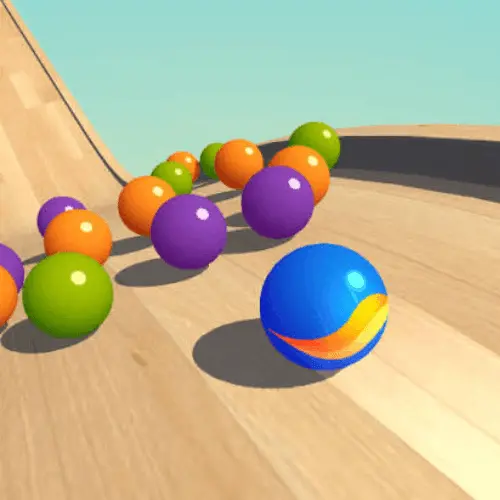
Marble Run
Marble Run is a browser-based construction puzzle built around one satisfying question: can your track guide a rolling marble from the start to the finish? Instead of relying…
 Works on Desktop & Mobile
Tested By BunaGames
- Test date
- July 6, 2026
- Tested on
- Chrome 150
- Device
- Desktop
- Operating system
- macOS and Windows
- Game loaded successfully
- Yes
- Fullscreen works
- Yes
- Sound works
- Yes
- Save progress
- Local browser storage
- Mobile compatibility
- Partially tested
- Keyboard controls
- Working
- Controller support
- Not detected
- Average loading time
- 4.2 seconds
- Known issues
- Minor delay after entering fullscreen
Marble Run not loading?
- Refresh the page.
- Disable restrictive content blockers temporarily.
- Confirm JavaScript and WebGL are enabled.
- Clear the browser cache.
- Try another modern browser.
- Close unnecessary tabs.
- Switch off VPN if the game server is blocked.
- Use the Report a Problem button if the issue continues.
Continue Playing

Daily Challenge

Play 4 minutes today in Marble Run.
Leaderboard
- 1Community rating4.8 ★
- 2Player likes934
- 3Total votes991
- 4Your local progress0%
Your progress is saved locally in this browser. No account required.
 Your progress is saved locally in this browser. No account required.
Game Progress & Challenges
Why Play This Game?
 Instant PlayPlay instantly in your browser.
 Mobile FriendlyOptimized for all devices.
 Free to PlayNo hidden fees.
About "Marble Run"
Marble Run is a browser-based construction puzzle built around one satisfying question: can your track guide a rolling marble from the start to the finish? Instead of relying only on quick reactions, the game centers on planning, testing, and adjusting a route so gravity and momentum can do their work.
Your job is to create a workable marble path using track pieces and course elements. A successful run may need to handle slopes, turns, drops, loops, and obstacles without losing the marble’s speed or sending it off course. Each placement affects the next part of the route, so a small change near the beginning can improve—or disrupt—the entire design.
Marble Run fits players who enjoy physics puzzles, creative building, and the trial-and-error process of making a simple idea work. The marble is the moving test of every decision: release it, observe where the route succeeds or fails, then refine the construction. That build-test-adjust loop makes each completed run feel earned.
Although it appears in a running-game category, the central challenge is route design rather than controlling a character through a race. It is a measured, experimental game where smart placement and careful observation matter as much as speed.
Gameplay
Marble Run gameplay combines a construction sandbox mindset with a physics-puzzle objective. You assemble a course, start the marble, and watch how it responds to the path. Gravity pulls it downward, while slopes, turns, drops, and curved sections influence its direction and momentum. The goal is not simply to make a track look elaborate; it is to make a route that the marble can actually complete.
A run usually begins with a basic connection between the marble’s starting point and its intended destination. From there, you can refine the course by adding more interesting elements. A drop can give the marble useful speed, but an abrupt landing may also throw it away from the next piece. A loop is visually exciting, yet it requires enough momentum to carry the marble through. Obstacles add another layer of route planning because they must be approached at a workable angle.
The most useful gameplay skill is observation. When the marble fails, look for the exact failure point instead of rebuilding everything at once. Did it slow down before a curve? Did it leave a track edge? Did a connection create a bump or a sharp change of direction? Identifying one cause at a time turns experimentation into a clear puzzle-solving process.
This makes Marble Run different from a conventional runner. Progress comes from understanding the course and improving its flow. The best designs balance creativity with reliability: they look fun to watch, but they also give the marble a continuous, stable route.
Platform
Marble Run is presented as an online browser game, so it is intended to be played through a compatible web browser without treating it like a physical marble-run set. Open the game page, allow the game to load, and use the available on-screen interface to begin building and testing a course.
Because the experience depends on arranging track pieces and viewing the marble’s path, a screen that makes the build area easy to see is helpful. A larger display can make it easier to inspect connections, slopes, and obstacle placement, while a smaller screen may require more careful attention to the game interface.
The game’s core appeal is suited to short sessions as well as longer experiments. You can start with a straightforward route, test a single idea, and make incremental changes rather than needing to commit to a large course immediately. Like other browser games, it is designed around direct online access and quick play from the game page.
Specific device support, offline availability, account features, and save options are not established here, so use the controls and options shown inside the game for the most accurate guidance.
How to Play "Marble Run"
Start Marble Run by looking at the available build area and identifying where the marble begins. Before adding lots of pieces, decide on a simple route that moves generally downward and gives the marble a clear direction. A short working track is more useful than a large unfinished design because it lets you test the game’s physics immediately.
- Plan the first route. Create a basic path from the starting point toward the target area or end of the course.
- Place connected track pieces. Keep joins aligned so the marble has a continuous surface to roll across.
- Use height with purpose. Put downward sections where the marble needs to gain speed. Avoid wasting height on turns that do not improve the route.
- Add course elements carefully. Introduce drops, loops, and obstacles one at a time so you can understand how each one changes the run.
- Release and observe the marble. Watch the complete path, especially every connection and change in elevation.
- Adjust the failure point. If the marble stops, jumps a track, or misses an obstacle, modify the nearby section before changing the entire course.
- Retest after each major edit. Repeat until the route is stable and the marble travels through it cleanly.
Think of each attempt as a physics experiment. The marble provides feedback on your construction: too little speed may prevent it from clearing a demanding section, while too much speed can make a turn less stable. Build for smooth transitions rather than maximum complexity. Once a dependable route works, you can expand it with more dramatic drops, longer paths, or additional obstacles.
Controls
Marble Run uses the interactive controls displayed within the game itself for building a course, selecting available pieces, and starting a marble test. Since the exact control layout can vary with the version and device, the on-screen prompts are the reliable reference while you play.
Focus on the three main actions the interface is expected to support:
- Select: choose a track piece or course element from the available options.
- Place or arrange: position pieces to create a connected route for the marble.
- Test: start the marble and watch whether the construction works.
If a piece does not create the result you expected, return to the build area and revise its placement before testing again. Use deliberate, small changes when troubleshooting. Moving one turn, adjusting one slope, or simplifying one connection often gives clearer feedback than rebuilding several parts of the track at once.
For the most accurate input instructions, follow any control labels, tutorials, or help indicators shown on the Marble Run game screen.
Can "Marble Run" Unblocked?
Marble Run is available as an online game on BunaGames, letting players access the marble-building challenge directly from a web browser when the site and game page are available on their network. Load the page, wait for the game interface, and begin creating a route for the marble.
“Unblocked” can mean different things depending on where you are playing. BunaGames can provide the game through its normal browser page, but local restrictions may still be controlled by a school, workplace, library, device administrator, internet provider, or regional network policy. Those settings are outside the game itself.
For the smoothest experience, use a permitted browser and a stable connection. If the game does not load as expected, refresh the page, check whether browser features needed by the game are allowed, or try again on an approved personal connection. Do not attempt to bypass network rules or device restrictions.
Once the game is open, the focus is simple: build a connected track, run the marble, and improve the route through testing.
Tips for "Marble Run"
The strongest Marble Run courses are usually built through controlled experiments, not by placing every dramatic piece immediately. Start small, learn how the marble behaves, and add complexity only after the previous section works reliably.
- Build a dependable foundation first. Make a short route that the marble can finish before extending it. This gives you a working reference for speed and track alignment.
- Protect momentum. Long upward movement, awkward turns, and unnecessary detours can reduce the marble’s speed. Use drops and downward paths thoughtfully when the next feature needs more motion.
- Smooth the transitions. Track joins are critical. Even a route that looks connected can fail if a marble meets a sharp edge, abrupt angle, or poorly aligned turn.
- Test loops with enough approach speed. A loop is not just decoration. The marble needs sufficient momentum before entering it, so place it after a section that can support that movement.
- Use obstacles as route tests. Place them where the marble can approach predictably. A difficult obstacle is more manageable when the path before it is stable.
- Change one variable at a time. If the run fails, alter one nearby piece or one section of the course. Multiple changes make it harder to identify what fixed the problem.
- Watch the marble, not only the design. The marble’s speed, bounce, direction, and stopping point reveal more than the appearance of the track alone.
A useful strategy is to treat the route in sections: launch, speed-building path, challenge element, recovery path, and finish. Test each section in order. This approach reduces guesswork and helps you create courses that are both creative and functional.
Features "Marble Run"
Marble Run focuses on the satisfying connection between construction, physics, and repeatable testing. Its main features are built around designing a course and seeing whether a rolling marble can successfully travel through it.
- Physics-based marble movement: the marble’s route depends on gravity, direction, speed, and the shape of the track.
- Creative track construction: build a route rather than following a fixed character path, giving the player an active role in solving the challenge.
- Course elements: use track sections alongside concepts such as turns, drops, loops, and obstacles to shape the run.
- Experiment-driven puzzle solving: test a construction, identify the point where it fails, and revise the course.
- Momentum planning: decide where the marble should gain speed, slow down, change direction, or approach a more demanding feature.
- Visual feedback: each test run shows the practical result of your placement choices, making problems easier to diagnose.
- Accessible browser format: play the game online from its BunaGames page without needing a physical track set.
The key feature is the relationship between player creativity and predictable physical feedback. You are free to think like a builder, but the marble still has to obey the route you create. That balance keeps the game approachable: a basic downhill path can be easy to understand, while a more ambitious course can become a detailed puzzle involving alignment, timing, speed, and obstacle placement.
Marble Run also rewards patience. A successful route is not necessarily the longest or busiest one. Often, the most effective design is the course that gives the marble the cleanest, most consistent journey from start to finish.
Best "Marble Run" Similar Games & Top Picks
- Marble Run 3D: Race a country marble through 3D tracks, avoid hazards, collide with rivals, and reach the finish line in Marble Run 3D.
- Plonky: Play Plonky free in your browser. Guide a wobbly hero through traps, ropes, bars, and physics-based puzzle levels.
- TEMPLE RUN 2: Autumn: Run through the autumn jungle, avoid temple obstacles, collect treasure, and chase a higher distance in Temple Run 2: Autumn.
- TEMPLE RUN 2: Holi Festival: Run through a colorful Holi Festival route, avoid traps, collect coins, use power-ups, and stay ahead of demonic monkeys.
- Obby Sprunki: Pet World: Play Obby Sprunki: Pet World online. Explore pet-themed obstacle courses, travel through fantasy kingdoms, and progress with your companions.
FAQ - Marble Run
What is Marble Run?
Marble Run is an online construction and physics puzzle game where you create a route for a rolling marble. The goal is to arrange a track that guides the marble through course elements such as turns, drops, loops, and obstacles.
Rather than controlling a character through a preset level, you influence the action by building the route itself. The marble’s movement shows whether your design has enough speed, alignment, and stability.
Is Marble Run a running game or a building game?
It has elements of both categories, but its main activity is building and testing a marble course. The marble runs through the track after you create it, while the player’s challenge is planning the route and correcting weak points.
This makes it closer to a physics-based construction puzzle than a traditional reflex runner. Careful placement and observation are more important than rapid character movement.
How do I make the marble go through a loop?
Give the marble a smooth approach and enough momentum before it reaches the loop. A downward section or well-designed drop may help the marble gain speed, while rough joins and sharp turns can reduce momentum before the loop.
Test the route and watch where the marble slows down. If it cannot complete the loop, revise the approach path instead of assuming the loop alone is the problem.
Why does my marble leave the track?
A marble can leave the track when a connection is misaligned, a turn is too abrupt, a drop lands poorly, or the marble reaches a section with unsuitable speed. Examine the exact point where it exits the route.
Try smoothing the transition, changing the angle of the nearby piece, or simplifying that section. Small adjustments are often more effective than rebuilding the entire course.
Can I play Marble Run for free?
Marble Run is provided as an online game on BunaGames. Visit the game page in a supported browser and use the available game interface to build and test a marble track.
Availability can still depend on normal site access, browser compatibility, and any rules applied by the network or device you use.
What is the best way to start a Marble Run course?
Begin with a short, simple downhill route that gives the marble a clear path. Test it before adding challenging elements. Once the basic route works, add one feature at a time, such as a turn, drop, obstacle, or loop.
Starting small helps you understand how momentum and track connections affect the marble before you attempt a more elaborate construction.
Do I need fast reactions to play Marble Run?
Fast reactions are not the main requirement. Marble Run rewards planning, experimentation, and close observation. You create the conditions for the marble’s movement, then use each test run to improve the course.
Players who enjoy puzzles, creative problem-solving, and seeing a design work step by step may find the game especially satisfying.
What should I do if a course section keeps failing?
Isolate the failure. Check the track piece immediately before the problem, the connection itself, and the piece directly after it. Look for loss of speed, an uneven join, an overly sharp direction change, or an unstable obstacle approach.
Modify only one part, test again, and compare the result. This method gives clearer feedback and helps turn trial and error into purposeful track design.
More Games Like This
 Papas Sushiria
mobile ★ 4.6
Papas Sushiria
mobile ★ 4.6
 Papas Wingeria
mobile ★ 4.6
Papas Wingeria
mobile ★ 4.6
 Papas Scooperia
mobile ★ 4.7
Papas Scooperia
mobile ★ 4.7
 Papas Pizzeria
mobile ★ 4.6
Papas Pizzeria
mobile ★ 4.6
 Papas Freezeria
mobile ★ 4.6
Papas Freezeria
mobile ★ 4.6
 Papas Taco Mia
mobile ★ 4.6
Papas Taco Mia
mobile ★ 4.6
 Papas Cupcakeria
mobile ★ 4.6
Papas Cupcakeria
mobile ★ 4.6
 Hello Neighbor
mobile ★ 4.7
Hello Neighbor
mobile ★ 4.7
 sprunki phase 8
mobile ★ 4.7
sprunki phase 8
mobile ★ 4.7
 Fly the Plane
mobile ★ 4.8
Fly the Plane
mobile ★ 4.8
 Melon Playground
mobile ★ 4.7
Melon Playground
mobile ★ 4.7
 Sprunkr
mobile ★ 4.4
Sprunkr
mobile ★ 4.4
 Dune Surfer Game
mobile ★ 4.6
Dune Surfer Game
mobile ★ 4.6
 Call of Duty
mobile ★ 4.4
Call of Duty
mobile ★ 4.4
 Cupcake Clicker
mobile ★ 4.6
Cupcake Clicker
mobile ★ 4.6
 Poop Clicker 2
mobile ★ 4.8
Poop Clicker 2
mobile ★ 4.8
 Little Farm Clicker Game
mobile ★ 4.8
Little Farm Clicker Game
mobile ★ 4.8
 Minecraft Clicker
mobile ★ 4.7
Minecraft Clicker
mobile ★ 4.7
 Report a Problem
Comments About Marble Run