



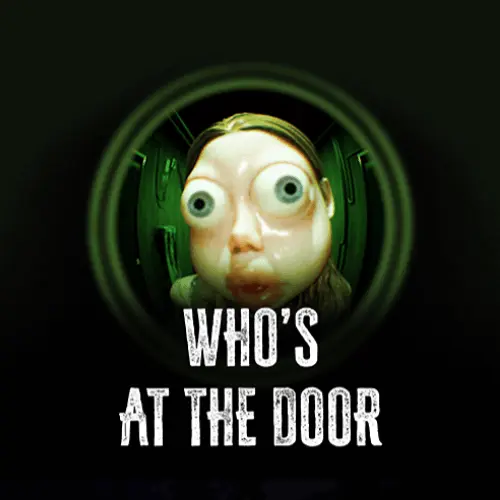
Who’s at the Door?
Who’s at the Door? is a psychological horror puzzle game built around observation, uncertainty, and the fear of noticing that something in a familiar room is no longer…
 Works on Desktop & Mobile
Tested By BunaGames
- Test date
- August 9, 2026
- Tested on
- Chrome 150
- Device
- Desktop
- Operating system
- macOS and Windows
- Game loaded successfully
- Yes
- Fullscreen works
- Yes
- Sound works
- Yes
- Save progress
- Local browser storage
- Mobile compatibility
- Partially tested
- Keyboard controls
- Working
- Controller support
- Not detected
- Average loading time
- 4.2 seconds
- Known issues
- Minor delay after entering fullscreen
Who’s at the Door? not loading?
- Refresh the page.
- Disable restrictive content blockers temporarily.
- Confirm JavaScript and WebGL are enabled.
- Clear the browser cache.
- Try another modern browser.
- Close unnecessary tabs.
- Switch off VPN if the game server is blocked.
- Use the Report a Problem button if the issue continues.
Continue Playing
Daily Challenge

Play 7 minutes today in Who’s at the Door?.
Leaderboard
- 1Community rating4.6 ★
- 2Player likes681
- 3Total votes753
- 4Your local progress0%
Your progress is saved locally in this browser. No account required.
 Your progress is saved locally in this browser. No account required.
Game Progress & Challenges
Why Play This Game?
 Instant PlayPlay instantly in your browser.
 Mobile FriendlyOptimized for all devices.
 Free to PlayNo hidden fees.
About "Who’s at the Door?"
Who’s at the Door? is a psychological horror puzzle game built around observation, uncertainty, and the fear of noticing that something in a familiar room is no longer right. You are trapped inside a small house with no memory of how you arrived there. The central challenge is not defeating enemies with weapons or navigating a huge map; it is studying the space around you closely enough to separate reality from hallucination.
The game uses an anomaly-hunting structure. Small visual, environmental, or character-based changes can matter, so the house becomes a puzzle board rather than a safe place. One moment may feel ordinary, while the next introduces an unsettling detail that tests whether you were paying attention. Some hallucinations remain present, while others can become an immediate threat.
This premise makes every return to the same rooms meaningful. Instead of relying on fast reflexes alone, you need memory, patience, and a steady method for checking the environment. The horror comes from doubt: a door, object, hallway, or visitor may look familiar, but familiarity is exactly what the game asks you to question.
Play it as a focused browser horror experience when you want a tense puzzle game that rewards careful looking over noisy action.
Gameplay
Who’s at the Door? centers on a repeating cycle of exploration and comparison. You examine the small house, absorb its normal layout, and watch for signs that the environment has changed. The game’s tension depends on details: an object may be misplaced, an area may appear altered, or a disturbing presence may challenge your sense of what belongs in the room.
Because the setting is compact, progress depends on building a reliable mental map. Learn where key objects, doors, walls, lights, and decorative details belong. Then revisit the space with purpose. A successful player does not merely glance around; they compare the current scene with the version they believe is normal and respond before an overlooked anomaly becomes a larger problem.
The psychological horror premise adds another layer. Your character is described as suffering from psychosis and having no memory, so the game turns perception itself into the puzzle. Not every alarming event has the same role. Competitor research identifies two broad types of hallucinations: anomalies that do not disappear and events that chase the player. That distinction encourages both calm investigation and readiness to react when the situation stops being passive.
- Observe: scan rooms and entrances for inconsistencies.
- Remember: retain the house’s baseline appearance between checks.
- Interpret: decide whether a strange detail is meaningful or misleading.
- Respond: act quickly when a hallucination becomes an active danger.
The result is a horror puzzle loop where knowledge of the setting becomes your most valuable resource.
Platform
Who’s at the Door? can be played in your web browser on BunaGames, letting you start the horror puzzle without treating it like a large installation or a long-form action campaign. Open the game page, allow the game to load, and use the game’s own prompts to begin exploring the house.
The supplied research also identifies a separate PC storefront listing for the game. That confirms the title has been presented as a PC horror experience, but it does not establish identical features, input options, saves, performance settings, or device support across every version. For that reason, treat the browser edition as its own way to access the core observation-based experience.
A desktop or laptop browser is the clearest fit for close visual inspection, since the game asks you to notice subtle environmental details. A larger screen, stable connection, and distraction-free viewing can make anomalies easier to identify. The available research does not verify dedicated mobile support, controller support, cross-device progress, or cloud saves, so those should not be assumed.
How to Play "Who’s at the Door?"
Start by giving the house your full attention before you rush to interpret every strange sight. The most useful first objective is establishing a baseline: notice the position of furniture, the look of doors and walls, lighting, decorations, and anything visible near the route you use most often. Psychological anomaly games reward players who can recall what a room looked like a moment earlier.
- Enter the game and inspect the immediate area. Look at the room as a whole before focusing on one object.
- Create a mental checklist. Remember fixed features such as entrances, furniture placement, wall details, and prominent props.
- Move through the house deliberately. Recheck familiar areas instead of sprinting past them.
- Compare each visit with the baseline. Ask what changed, what feels impossible, and whether the difference is persistent.
- Use the game’s presented choices or prompts. Follow the on-screen interaction guidance rather than guessing at actions.
- React to active danger. If a hallucination begins chasing you, shift from slow inspection to immediate survival and follow the game’s cues.
Do not assume that the biggest or loudest event is the only important one. A quiet inconsistency can be the clue that protects a run, while an obvious scare may be designed to make you overlook the environment. Keep your decisions tied to what you actually observed.
The game is best approached as an evidence puzzle. Notice a detail, compare it with your memory of the house, and act only after you have identified why it does or does not belong. This method keeps the experience tense while reducing random guesses.
Controls
The provided game research does not publish a definitive keyboard, mouse, touch, or controller layout for every version of Who’s at the Door?. The reliable approach is to check the game’s opening screen and any on-screen prompts after it loads. Those instructions are the best authority for the browser build currently available on this page.
Since the experience is based on moving through a small house, examining surroundings, and responding to events, prioritize inputs that let you navigate carefully and interact when prompted. Avoid assuming that a control scheme from a PC storefront version will match the browser version exactly.
| Need | Best approach |
|---|---|
| Movement | Follow in-game prompt |
| Interaction | Use displayed action cue |
| Menu actions | Check pause or start screen |
| Active threats | Respond to game guidance |
If an input does not respond, first click inside the game area to ensure the browser has focus. Then review the visible instructions rather than repeatedly pressing unverified keys. This is especially helpful in a detail-driven horror game, where accidental menu actions or lost focus can interrupt your concentration.
Can "Who’s at the Door?" Unblocked?
Who’s at the Door? is available to play through BunaGames in a browser, making it a convenient choice for players looking for a free online horror puzzle experience. Load the game page and begin when the browser version is ready; no separate external storefront link is needed to reach the game here.
“Unblocked” can mean different things depending on where you are playing. BunaGames provides access from its own game page, but school, workplace, library, network, browser, or device restrictions can still affect whether any online game loads. Those restrictions are controlled by the network or device administrator, not by the game itself.
For the smoothest session, use a current browser, keep a stable internet connection, and close tabs or applications that may distract you from subtle visual changes. If the game does not start, refresh the page and check whether your browser is blocking required game content. Do not try to bypass network rules or security policies.
The game’s compact setting suits a short, concentrated play session, but its observation mechanics reward playing somewhere you can focus on the screen and sound cues without interruption.
Tips for "Who’s at the Door?"
The strongest strategy in Who’s at the Door? is systematic observation. Horror can push you into rushing, but rushing is exactly how a persistent anomaly becomes easy to miss. Treat every room like a scene you are investigating. Build a consistent scan order, such as checking the doorway first, then major furniture, wall details, lighting, and finally smaller objects.
- Learn the normal state early. Your first careful look is more valuable than a dozen panicked rechecks. Notice where major objects belong and what the environment feels like when nothing is wrong.
- Check the same landmarks repeatedly. Use stable reference points such as doors, corners, furniture, and wall features. Repetition improves comparison accuracy.
- Look for absence as well as addition. An anomaly may be a missing item, altered arrangement, or change in a familiar detail, not only a new monster or obvious scare.
- Separate persistent clues from urgent danger. Research describes hallucinations that remain and others that chase. Keep inspecting when the threat is passive, but be ready to change pace when the game signals immediate danger.
- Do not overcorrect after one scare. A frightening event can make every shadow feel suspicious. Return to evidence: what specifically changed from the known layout?
- Use short sessions of concentrated attention. Fatigue makes visual comparison harder. A brief, focused run can be more effective than playing while distracted.
A useful mental habit is to name the difference before you act: “that object was not there,” “the doorway looks altered,” or “the room has a new presence.” This turns vague unease into a testable observation. If you cannot identify a concrete change, make another careful pass rather than relying entirely on instinct.
Most importantly, let the game’s small house work in your favor. You do not need to memorize a giant world. You need to understand one unsettling space well enough that reality and hallucination stop blending together.
Features "Who’s at the Door?"
Who’s at the Door? stands out through a focused psychological-horror design rather than a broad action-game structure. Its small-house setting concentrates attention on observation, making the environment itself the main puzzle. Familiar rooms become unsettling because the game asks you to remember how they should look and detect when that expectation is broken.
- Psychological horror premise: the protagonist is trapped, has no memory, and experiences psychosis, placing uncertainty at the center of the story and gameplay.
- Anomaly-hunting gameplay: progress depends on identifying strange environmental changes and distinguishing reality from hallucination.
- Compact, repeatable setting: a small house creates a manageable but tense space where details become increasingly important.
- Memory-driven puzzle solving: success depends on comparing the current scene with your recollection of the normal environment.
- Different threat behaviors: the game includes hallucinations that persist as anomalies and others that become active chases.
- Atmosphere over firepower: the core conflict is perception and survival, not a conventional shooter-style combat loop.
- Browser access on BunaGames: play the online version directly from the game page.
The key feature is the game’s use of uncertainty as a mechanic. In many horror games, a monster is dangerous because it attacks. Here, an altered room can be dangerous because it makes you doubt your own memory. That creates a different kind of pressure: you are not just reacting to a threat, but evaluating whether a threat is real, persistent, or about to escalate.
This makes the game a strong fit for players who enjoy anomaly games, contained horror settings, environmental storytelling, and puzzles that reward attention to small visual differences.
Best "Who’s at the Door?" Similar Games & Top Picks
- Slenderman: Play Slenderman online on BunaGames. Learn the survival horror premise, gameplay approach, access details, controls guidance, and tips.
- Bendy And The Ink Machine: Play Bendy And The Ink Machine, a first-person cartoon horror adventure with puzzles, exploration, ink-soaked danger, and a dark studio mystery.
- Fnaf 3: Play Fnaf 3 online and face a single deadly animatronic, phantom illusions, and tense point-and-click survival horror.
- Fnaf 4: Play Fnaf 4 online and face nightmare animatronics in a tense survival horror challenge built around awareness, timing, and nerves.
- FNF Silly Billy: Play FNF Silly Billy online and face Yourself in a tense Friday Night Funkin' rhythm battle with keyboard note controls.
FAQ - Who’s at the Door?
What is Who’s at the Door?
Who’s at the Door? is a psychological horror puzzle game set in a small house. You play as a character with no memory who must observe the environment and distinguish reality from hallucinations. Its main gameplay focus is anomaly detection: noticing when familiar rooms, objects, or presences have changed.
Is Who’s at the Door? a horror game or a puzzle game?
It is both. The horror comes from the unsettling house, hallucinations, and uncertainty about what is real. The puzzle element comes from careful observation, memory, and deciding which changes in the environment matter. Rather than relying on a traditional combat-centered structure, the game makes perception and attention central to survival.
How do I play Who’s at the Door? online?
You can play the browser version on BunaGames by loading the game page and following the instructions shown inside the game. Once it begins, inspect the house carefully, learn the normal appearance of key areas, and watch for details that do not match your memory of the setting.
What should I look for in the house?
Look for changes to familiar features: objects that appear, disappear, move, or look different; altered room details; unusual presences; and anything that conflicts with the layout you previously observed. A consistent scan routine helps. Check the same doorways, furniture, walls, lighting, and major props every time you revisit an area.
Are all hallucinations handled the same way?
No. Available research describes two broad hallucination behaviors: anomalies that remain present and others that chase the player. Persistent anomalies reward calm inspection and accurate recognition. A chasing hallucination is more urgent, so pay attention to the game’s immediate prompts and react quickly when the situation changes from observation to danger.
What are the controls for Who’s at the Door?
A complete control list is not established in the supplied research for every version. Check the opening screen and on-screen prompts in the browser game for the current controls. If inputs do not work at first, click inside the game area so the browser focuses on it, then review the visible instructions.
Can I play Who’s at the Door? on mobile?
The available research does not confirm dedicated mobile support for the browser edition. Because the game relies on spotting subtle visual differences, a desktop or laptop screen is generally the clearest way to inspect the house. Use the game page’s current prompts and loading behavior to determine whether your specific device is supported.
What is the best strategy for beginners?
Slow down and memorize the baseline environment before reacting to every scare. Use fixed landmarks to compare each room with earlier visits, identify a specific difference before making a decision, and stay alert for a shift from a passive anomaly to an active chase. The better you know the house, the easier it becomes to recognize what does not belong.
More Games Like This
 Slenderman
Horror ★ 4.7
Slenderman
Horror ★ 4.7
 Bendy And The Ink Machine
Horror ★ 4.6
Bendy And The Ink Machine
Horror ★ 4.6
 Fnaf 3
Horror ★ 4.7
Fnaf 3
Horror ★ 4.7
 Fnaf 4
Horror ★ 4.7
Fnaf 4
Horror ★ 4.7
 Slide in the Woods
Horror ★ 4.3
Slide in the Woods
Horror ★ 4.3
 Scary Shawarma Kiosk: The Anomaly
Horror ★ 4.7
Scary Shawarma Kiosk: The Anomaly
Horror ★ 4.7
 FNAF Free Roam
Horror ★ 4.6
FNAF Free Roam
Horror ★ 4.6
 FNF Silly Billy
Horror ★ 4.6
FNF Silly Billy
Horror ★ 4.6
 The Man from the Window
Horror ★ 4.6
The Man from the Window
Horror ★ 4.6
 Baldi
Horror ★ 4.7
Baldi
Horror ★ 4.7
 Hello Neighbor
Horror ★ 4.7
Hello Neighbor
Horror ★ 4.7
 Eyes: The Horror Game
Horror ★ 4.5
Eyes: The Horror Game
Horror ★ 4.5
 Plants vs Zombies 2 “PVZ 2”
Horror ★ 4.7
Plants vs Zombies 2 “PVZ 2”
Horror ★ 4.7
 Jolly 2
Horror ★ 4.6
Jolly 2
Horror ★ 4.6
 Ultimate Custom Night UCN
Horror ★ 4.5
Ultimate Custom Night UCN
Horror ★ 4.5
 How to Get a NEIGHBOR
Horror ★ 4.4
How to Get a NEIGHBOR
Horror ★ 4.4
 Piggy
Horror ★ 4.7
Piggy
Horror ★ 4.7
 Idols of Ash
Horror ★ 4.4
Idols of Ash
Horror ★ 4.4
 Report a Problem
Comments About Who’s at the Door?